Organic Marketing
Organic marketing for small business, explained channel by channel: pillar and cluster content, E-E-A-T, local SEO and digital PR, built for a world where AI Overviews are changing what gets clicked.
Category
Organic Marketing
Published
30 August 2026
Read Time
15 min read
Summary
Organic marketing for small business means earning traffic and trust through SEO, content, digital PR and local search, rather than paying for it. In 2026 that means building pillar and cluster content deep enough to demonstrate real E-E-A-T, protecting local search where AI Overviews still barely reach, and measuring clicks and conversions rather than rankings alone. This guide covers the full strategy, channel by channel, with the exact model we use with clients.
AI Overviews now appear on 48% of Google searches and cut organic click-through by up to 61% on generic, informational content - so if your approach to organic marketing for small business still looks like it did in 2023, the next core update will rewrite it for you whether you plan for that or not. That's not a reason to abandon organic search. It's a reason to get a lot more specific about what still works.
Organic marketing covers everything that earns traffic and trust without ad spend - SEO, content, digital PR and local search - and for a small business without a six-figure marketing budget, it remains the most durable way to compound visibility over time. This guide walks through what's actually changed in 2026, why pillar and cluster content now builds the topical authority Google rewards, why local search is one of the few places AI Overviews still can't compete, and how to measure whether any of it is genuinely working. If you'd rather have this built for you end to end, that's exactly what our organic marketing service covers.
Organic marketing for small business is any strategy that earns traffic, leads and trust without paying for placement - search engine optimisation, content marketing, digital PR and social media - as opposed to paid advertising, where visibility stops the moment the budget does.
The distinction matters because the two work on completely different timelines. Paid advertising can deliver leads within days, but it stops delivering the moment you stop paying for it. Organic marketing takes longer to build - usually three to six months before it compounds meaningfully - but it keeps working long after you've stopped actively working on it.
That's the trade a lot of small business owners get wrong. They either abandon organic content after eight weeks because paid ads are outperforming it early on, or they publish organic content with no real strategy behind it and wonder why none of it ranks. The businesses that get genuine value from organic marketing understand why SEO shapes far more than rankings - it shapes who finds you, how much they trust you before they've even spoken to you, and how likely they are to convert once they land on your site.
In practice, that usually means three channels working together rather than in isolation: a website built to rank and convert, a content strategy that targets what your customers are actually searching for, and a digital PR or link building effort that earns the kind of external validation Google can't ignore. Treat any one of them as a standalone project and the other two end up carrying the weight alone.
Social media sits alongside these rather than replacing any of them. It rarely drives direct organic search traffic on its own, but it does two things well - it distributes content to an audience that wouldn't otherwise find it through search, and it puts your expertise in front of the same journalists and site owners you'll eventually want linking back to you. Treat it as the distribution layer for the content and PR work above, not a fourth standalone channel competing for the same limited hours.
Tip: if you're currently splitting budget evenly between paid and organic, that's usually backwards for a business under six months into its marketing. Paid should carry the immediate pipeline while organic content and SEO compound in the background.
The headline stat is alarming if you don't look past it: AI Overviews cut organic click-through by up to 61% on informational content - the definition pages, generic how-to guides and comparison lists that used to reliably carry small business blogs. If your content strategy is built entirely on that kind of thin, generic coverage, that traffic is genuinely at risk.
But the risk isn't evenly spread. Local service pages face traffic risk of roughly 15-30%, while generic informational pages face 40-80%, because AI Overviews still only appear on around 7% of local searches compared to roughly 48% of search overall. That gap is the opportunity hiding inside the bad news: local and highly specific content is far more defensible than generic advice ever was.
There's a second piece of good news buried in the same data. Brands that do get cited inside an AI Overview earn around 120% more organic clicks per impression than uncited competitors on the same query - being referenced isn't just visibility, it changes the commercial outcome of that search. The businesses actually losing traffic aren't losing it to AI. They're losing it because their content was never specific enough to be worth citing in the first place.
For a small business, the practical implication is straightforward even if the data looks intimidating. Stop publishing the kind of generic "what is X" content that any competitor could have written, and start publishing the kind of specific, experience-backed content - real numbers, real local detail, real named tools and outcomes - that gives an AI Overview a genuine reason to cite you over the next result down.
A pillar and cluster content model means publishing one comprehensive guide on a core topic - the pillar - alongside a set of narrower articles on specific subtopics - the clusters - all interlinked together. It's the content architecture Google's algorithms now use to judge whether a site is a genuine authority on a subject, not just a collection of keyword-optimised pages.
This isn't a new idea, but Google's March 2026 Core Update made it far more consequential. Sites building genuine topical depth through interlinked clusters are now seeing meaningfully higher organic traffic than sites relying on standalone articles, even when those standalone pieces are individually well-written. The signal Google is optimising for is topical depth and internal link coherence across a subject, not any single page's quality in isolation.
We've seen this work directly. G-1 Nutrition came to us in a weight management market dominated by names like Asda Online Doctor - competitors with far bigger budgets and far more domain authority to throw around. A single pillar guide backed by 14 supporting cluster articles, medically reviewed by a GPhC-registered pharmacist, put that pillar page on page one, ranking above Asda. Depth and structure beat budget in that market, and they usually do.
The practical starting point is keyword research done at the topic level, not the page level. Using a tool like Google Trends to spot seasonal patterns helps map which cluster topics deserve priority and when to publish them, so cluster content lands just before demand peaks rather than after it. Content strategy and SEO work best as one combined system, not two separate workstreams competing for the same calendar slot.
You don't need twenty thin clusters to make this work. Three to seven well-developed clusters under a genuinely comprehensive pillar page will outperform a scattered content calendar with no architecture behind it, because each cluster reinforces the pillar's authority rather than competing with it for the same attention.
The linking has to run both ways to actually work. Every cluster article should link back to the pillar page, and the pillar page should link out to every cluster underneath it, so a reader (and a crawler) can move between the broad overview and the specific detail without hitting a dead end. Miss that bidirectional structure and you end up with a pillar page and a handful of orphaned articles that never pass any authority between each other.
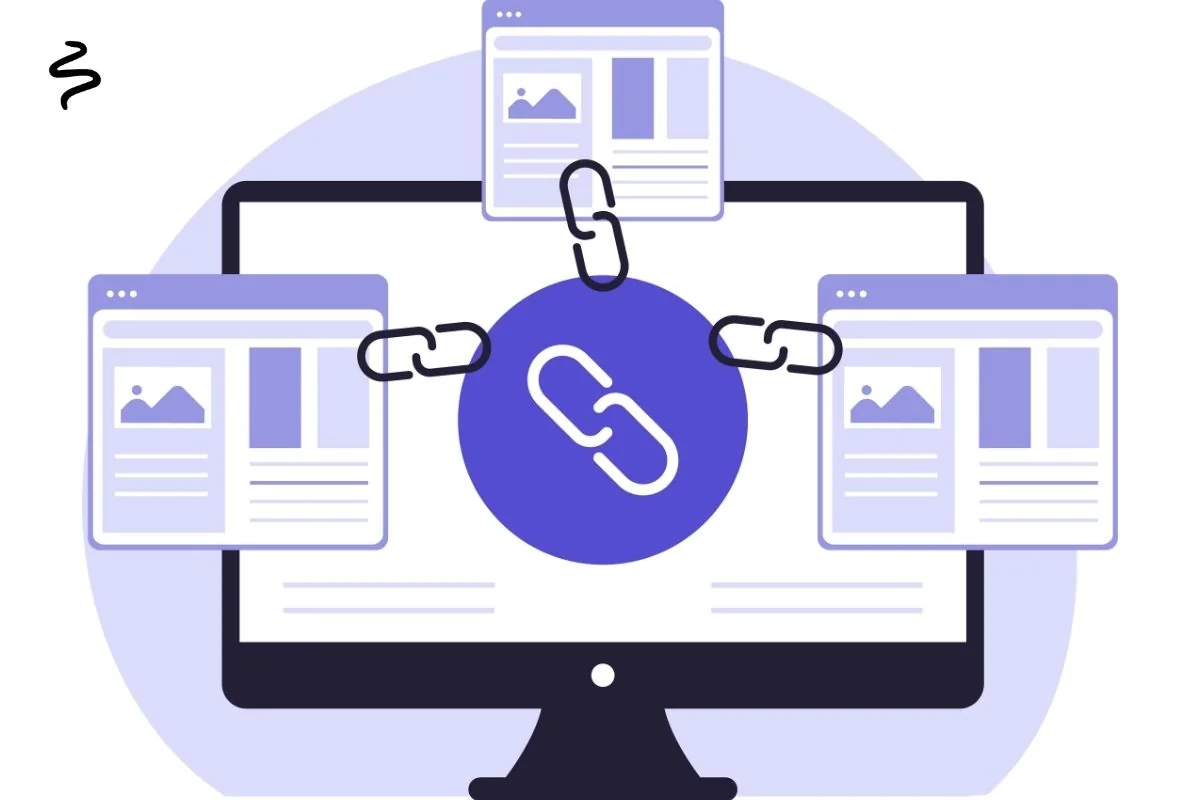
E-E-A-T stands for Experience, Expertise, Authoritativeness and Trustworthiness - the framework Google's own documentation uses to explain what its quality raters look for in content. For a small business, it means proving you've actually done the work, not just written about it.
Experience is the easiest signal to demonstrate and the one most small businesses skip entirely. A named author bio, real photos of completed work and specific numbers from your own results carry far more weight than generic advice written by someone who's never actually run the business they're describing.
Tip: if you're publishing case studies, use real figures rather than rounded claims. A page showing 8x organic traffic in 12 months reads as evidence, while "significant growth" reads as marketing copy that Google's quality raters are specifically trained to discount.
Trustworthiness has a more technical side that's easy to overlook. A secure HTTPS site, clear contact details, an accurate privacy policy and genuine customer reviews all feed into the same signal, and they cost nothing to fix if they're currently missing. Authoritativeness is the one part of E-E-A-T you can't build directly on your own site - it depends on genuine external validation, which is exactly what the link building and digital PR section below covers.
Local SEO for small business remains one of the most defensible parts of organic marketing, because AI Overviews currently appear on only around 7% of local searches compared to roughly 48% of search queries overall. For a business with a physical location or a defined service area, that gap is where organic marketing still delivers close to its full value.
Google Business Profile is doing a lot of the heavy lifting here. Actions taken directly from Google Business Profile listings - calls, direction requests, website clicks and bookings - grew 41% year-on-year according to Google's own 2026 data, which tells you where local intent is actually going even as broader search behaviour shifts toward AI-generated answers.
Picture Smiths is a clear example of what a properly executed local keyword strategy delivers. A branding agency competing for "Design Agency Huddersfield" went from position 75 to position 1, growing organic traffic 5x in the process, entirely through technical SEO fixes and a local keyword push rather than any paid spend behind it.
Tip: a fully optimised Google Business Profile with accurate categories, regularly updated photos and consistent NAP (name, address, phone) data across every directory listing is a bigger lever right now than almost any other single local SEO action.
Local content pairs well with this work too - locally specific guides and location pages give Google Business Profile something to point to, and they're exactly the kind of specific, hard-to-replicate content that AI Overviews currently struggle to summarise away.
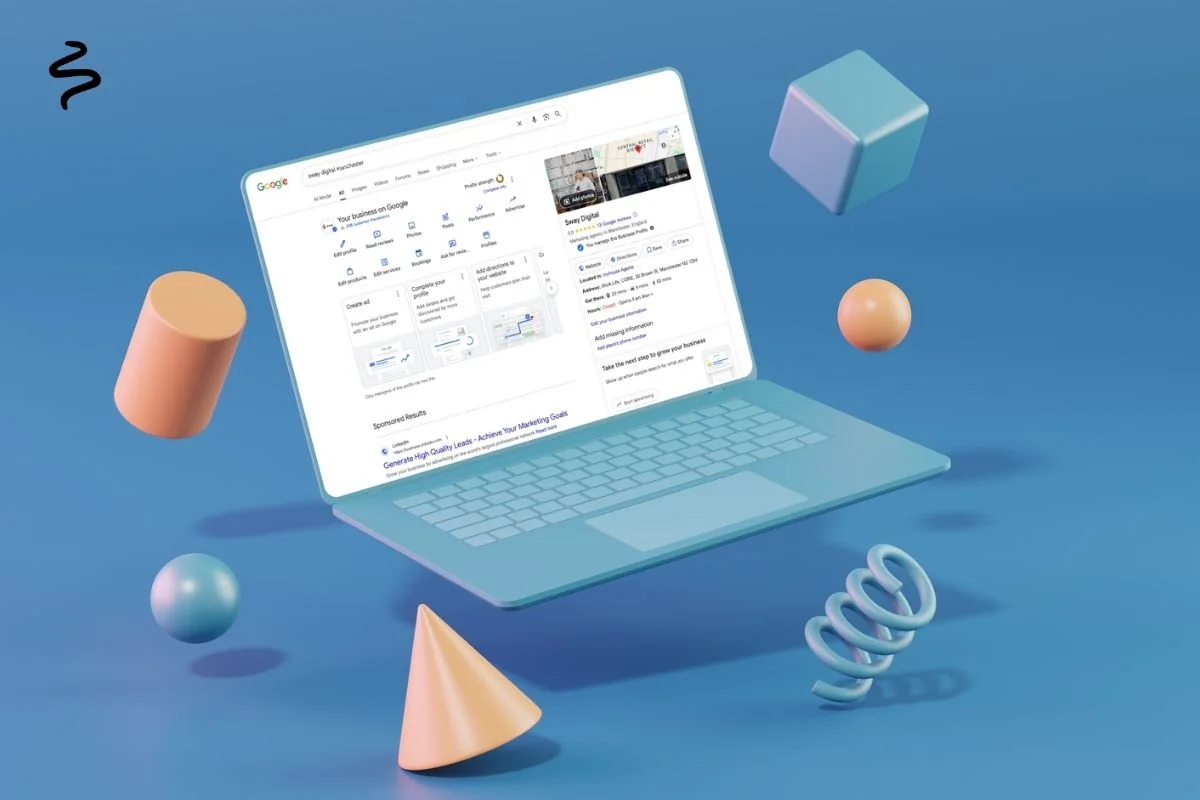
Link building and digital PR earn backlinks from other websites, which Google treats as a vote of confidence in your content. Digital PR specifically means earning coverage from journalists and publications rather than negotiating placements directly, and it's currently rated the single most effective link building tactic by SEO professionals.
Ahrefs' own research across close to a million web pages found that most page-one rankings pick up new backlinks at a pace of 5-14.5% per month - link building isn't a one-off task, it's an ongoing signal Google expects to see building steadily over time, not a box you tick once and forget.
We ran a single digital PR campaign for Manor House Lindley built entirely around the venue itself, and it earned 70+ top-tier links including coverage in Condé Nast Traveller and The Times. That's the kind of authority a small business genuinely cannot buy through directory submissions or guest posts - it has to be earned through a story that's actually worth covering.
Sustained investment in digital PR is becoming the norm rather than the exception, with the majority of businesses increasing their digital PR spend in 2026 and reporting measurable lifts in branded search volume within a month or two of a successful campaign. You don't need a national newspaper feature to get value out of this either - a well-pitched story to a regional publication or a trade title relevant to your industry earns a lower-DR link than The Times, but it's still a genuine editorial vote of confidence that a directory listing or a bought link never will be.
For most small businesses, a structured approach across multiple link building strategies - local citations, digital PR, guest content and partnerships - works better than betting everything on one channel. If a full PR campaign feels out of reach without an agency behind it, building a content strategy specifically designed to earn press coverage is the more accessible starting point, and it compounds into the same authority signals over time.
Measuring organic marketing for small business means tracking clicks and conversions, not just keyword position, because in an AI Overview world a page can hold position one and still lose most of its clicks to the answer box sitting above it.
Google Search Console is where this shows up first. The clearest AI Overview impact signal is a page holding steady or growing impressions while its click-through rate collapses - that's demand still finding the page in search, just not clicking through anymore, and it's a completely different problem to an actual ranking drop.
GA4 picks up from there, showing what happens after the click - which organic landing pages actually convert into enquiries or bookings, not just which ones pull in traffic. A page with modest traffic and a high conversion rate is usually worth more to the business than a high-traffic page that never turns into a lead.
Tip: compare the same quarter year-on-year in Google Search Console rather than month-to-month. It strips out seasonal noise and gives you a far cleaner read on whether an AI Overview or a genuine ranking change caused any drop you're seeing.
Set a baseline now if you haven't already, ideally from before AI Overviews became widespread in your market, and revisit it every quarter. Without that baseline, it's genuinely difficult to tell the difference between a strategy that isn't working and a strategy that's working exactly as well as it always did, just measured against a search landscape that's changed underneath it.
Organic marketing for small business isn't dead because of AI Overviews - it's just more selective about what still works. Three takeaways worth acting on: build pillar and cluster content that goes deep enough to earn genuine topical authority rather than scattering thin pages across every keyword you can think of, protect your local search presence since that's where organic still holds close to full value, and measure clicks and conversions in Google Search Console and GA4 rather than trusting rankings alone.
If you want a second pair of eyes on where your own content currently stands against these three areas, book a free 30-minute strategy call and we'll walk through it together. And if you're specifically wondering whether AI tools like ChatGPT and Perplexity can currently find and recommend your business, get the free Answer Engine Optimisation report - it's the fastest way to see exactly where the gaps are.
What's the difference between organic marketing and digital marketing?
Digital marketing is the umbrella term covering everything online, paid and unpaid. Organic marketing is the unpaid subset - SEO, content, digital PR and social media - as opposed to paid advertising like Google Ads or Meta Ads, where visibility stops the moment you stop paying.
How long does organic marketing take to show results for a small business?
Most small businesses see initial traction within three months and meaningful compounding growth by six, though the full return on a content and SEO strategy usually takes closer to twelve months to show up fully. Triline Contracts went from no SEO strategy at all to a 1,500% rise in organic impressions and multiple number-one rankings within that kind of timeframe, using competitor benchmarking and rebuilt category pages rather than any paid spend.
Is organic marketing still worth it with AI Overviews taking over search results?
Yes, though the strategy has to be more specific than it used to be. AI Overviews cut click-through on generic informational content significantly, but local search, highly specific expertise and content that earns citation inside an AI Overview all remain genuinely effective.
Do I need a pillar and cluster content strategy, or can I just publish individual blog posts?
Individual posts can still rank, but they rarely build the topical authority Google's algorithms now reward at scale. A pillar and cluster structure - one comprehensive guide plus several supporting articles, all interlinked - signals genuine expertise on a subject in a way that scattered individual posts don't.
What's the fastest organic marketing win for a small business with no existing SEO?
Claiming and fully optimising your Google Business Profile, since local search is one of the few areas where AI Overviews still have minimal presence and Google Business Profile actions grew 41% year-on-year in 2026. It's free, takes under an hour to set up properly, and starts working faster than any content strategy will.

Written By
Founder, Sway Digital • MSc Digital Marketing Communications
Philip Beaumont is the founder of Sway Digital, a digital agency built to sway your audience - combining website design & development, SEO, paid advertising, and brand identity into strategies that move the numbers that matter. He holds an MSc in Digital Marketing Communications and works hands-on with every client, from strategy through to execution.
Connect on LinkedInReady to put this into practice?
Book a free strategy call and we'll show you exactly how this applies to your business.