Insights - Organic Marketing
A practical guide to spotting seasonal search patterns - and using them to plan content, landing pages, and campaigns before demand peaks, not after.
Read Time
7 min read
Tool
Google Trends (free)
Best For
Seasonal & niche keywords
Key Example
Black Friday
What Is Google Trends?
Google Trends provides access to Google search request data. It's anonymised, but still a great tool for exploring what the world is searching for over any given time - which is exactly why it's so useful for identifying keyword seasonality. You can see which keywords are becoming more or less popular as the seasons change, and combine that with tools like Google Ads, Ahrefs, or SEMrush to help shape a genuinely seasonal SEO and content strategy.
Why It Matters
Seasonal keywords play an important role in SEO, PPC, and content marketing - especially for eCommerce businesses. Take a company like Argos: for their marketing team, it's genuinely useful to know what customers are searching for in the run-up to peak shopping periods.
Black Friday is one of the busiest days in the retail calendar, so understanding exactly when people start searching for Black Friday deals - a month before, two months, three - is important. Get that timing right, and you can prepare your website to take full advantage of the busiest shopping periods of the year, rather than catching up once demand has already peaked.
Spotting The Pattern
To identify keywords with high seasonality, look for terms that spike in search volume during certain months. Seasonality shows up most clearly on niche keywords - think "Black Friday," "Christmas trees," or "Easter eggs."
You can still rank for these terms all year round, but it takes a lot more time and effort - it's far more efficient to focus your content creation around the months with the highest search volume.
Seasonal keywords are usually tied to holidays and specific events, so if you target them, you may only see meaningful traffic during those windows. And because these events happen just once a year, competition for them can still be fierce - it's worth checking who's already ranking for a seasonal term before deciding whether it's worth the effort to chase.
The Quiet Months
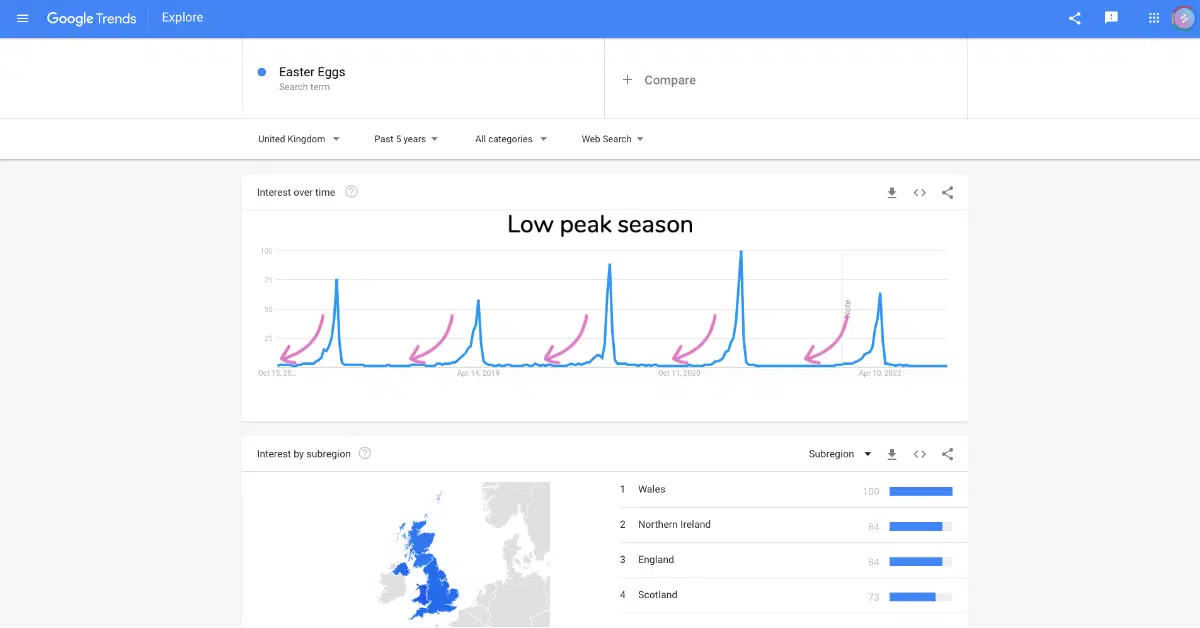
It's just as important to spot when a keyword is out of season as it is to spot when it's peaking. Understanding that pattern lets you get content ready well before the peak hits - often while competition for the term is still low, since fewer people are publishing during the quiet months.
To find it, look at the interest graph over 12 months and hover along the line to see the number behind each point - you're looking for the lowest sustained period. If you see consistently low search volume across most of the year, that's your signal to create content during the low season, so you're already in place and indexed by the time demand rises again.
Worked Example
Recognising seasonal trends is what makes the difference - throughout the year there are peaks and dips, and it's during the dips that you want to be planning and preparing for the next one.
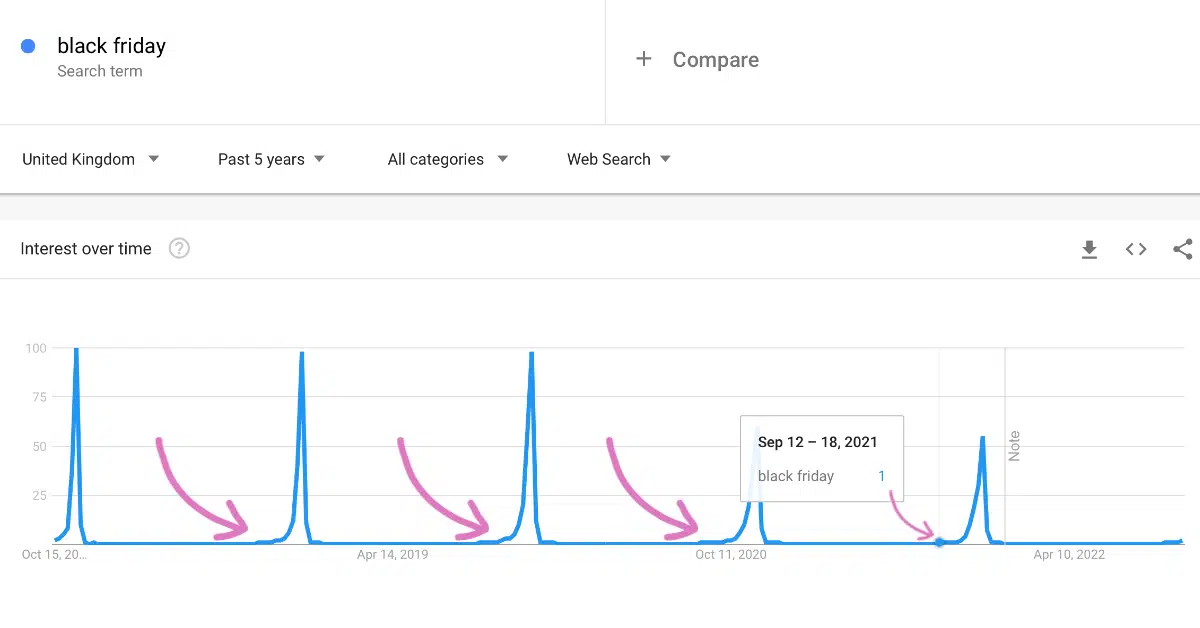
Black Friday is one of the biggest trends of the year, and a relatively new one, which makes it a good example of what Google Trends can reveal. Looking at the graph above, there's a clear surge every year as Black Friday approaches - but perhaps surprisingly, some searches for "Black Friday" start as early as the second week of September. That means having a landing page ready, indexed, and optimised by September is genuinely worth doing.
Knowing when people start searching also tells you what to do with that time:
Black Friday and Cyber Monday are when people search for sales and bargains - a guide to "Early Black Friday Offers" published in September puts you in front of shoppers before the rush.
Tech sells heavily over Black Friday and Cyber Monday - refreshing content, improving on-page SEO, or running a link-building push on your key category pages in good time can boost rankings before the peak.
Around "Black Friday" you'll also see a rise in branded searches - particularly for tech brands like iPhone and Samsung - alongside non-branded terms like "mobile phones," "TVs," and "headphones." That makes it worth fully optimising brand category pages too, and building brand-specific guides to help dominate search through the peak.
Long Tail Keywords
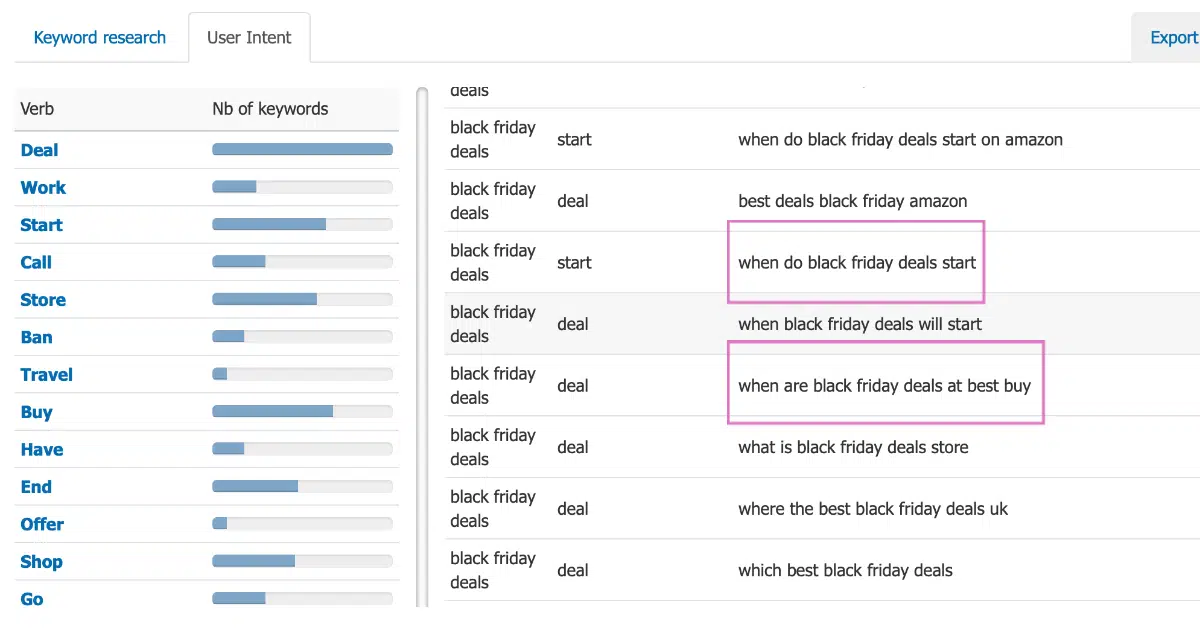
Long-tail keywords work alongside seasonality trends to sharpen a content strategy further. Customers often search using specific, full-sentence questions rather than short terms - a retailer like Amazon, for instance, stands to gain thousands of visits by creating content that answers those questions directly.
Around Black Friday, that might look like "what are the best Black Friday TV deals" or "what are the cheapest mobile deals on Black Friday." A guide built around exactly those questions - showing the cheapest deals across categories - is a strong way to drive targeted traffic.
Key Takeaways
Google Trends is a great way to identify keywords with high seasonality, because it shows you exactly when people search for those terms - useful for timing blog posts, social content, or on-site promotions. It's just as useful for spotting low seasonality, since you can see the average search volume for each month too. Together, that data helps decide which keywords to focus on, and when to publish, so your content is ready and waiting when your audience actually starts searching.

Written By
Founder, Sway Digital • MSc Digital Marketing Communications
Philip Beaumont is the founder of Sway Digital, a digital agency built to sway your audience - combining website design & development, SEO, paid advertising, and brand identity into strategies that move the numbers that matter. He holds an MSc in Digital Marketing Communications and works hands-on with every client, from strategy through to execution.
Connect on LinkedInWant a Seasonal Content Plan?
Book a free 30-minute strategy call. We'll talk through your goals and follow up with a clear plan.