Organic Marketing
SEO isn't just about Google rankings. It shapes how much traffic reaches your site, who that traffic is, how likely they are to convert, and how much your brand is trusted along the way.
Category
Organic Marketing
Published
22 July 2026
Read Time
10 min read
Chances are you're reading this blog because you know you "need to do SEO." But you'd like to be in a position where it actually feels like something you want to do, rather than a "should."
As a business owner, or digital marketing professional, the importance of SEO is crucial to understand - in order to get going in the first place, and to keep up your momentum.
SEO is important for several reasons, which we'll explore below. Not just "Google rankings."
It affects how much traffic comes to your website, as well as the type of people, their likelihood to convert, and ultimately how many leads you can drive online.
Not only that, but it helps your brand awareness and local visibility too - two "softer" factors many people forget about.
So how does SEO achieve this? Let's take a look.
Before we head straight into its benefits, let's recap SEO a.k.a. search engine optimisation.
Search engine optimisation involves optimising your website's content, user experience, and structure - all to make it easier for search engines to crawl your content, determine your rank in search engine results, and ultimately show your web pages to the right users.
SEO encapsulates three main areas:
Each area of SEO is highly valuable, though it can be tricky to nail all three without an SEO expert to hand.
Executing all three areas of SEO well has multiple short- and long-term benefits, for both your website and its users. But the true beauty of SEO lies in its ability to transform a website from just a pretty page of words to a useful business and digital marketing tool.
Let's take a look at the advantages in more detail.
One of the most common reasons people get into SEO is Google rankings. Everyone wants to be on page 1 of search engine results pages (SERPs).
The logical conclusion most people draw is that the more you appear in SERPs, the more visibility you have and the more likely you are to receive click-throughs. This means more traffic and (hopefully) more leads.
But why does it matter so much today?
Why do SERPs matter? - According to online statistics, less than 10% of users click through to page 2 search engine results, with many of us not even scrolling down to the 6th or 7th result. It's well known that the top 3 organic search results (those after adverts) receive the lion's share of clicks, and unfortunately the drop in clicks is exponential as you move down: 2023 data from firstpage.com shows that ranking #1 generates around 40% of clicks, dropping to 19% for ranking #2 and just 10% for ranking #3.
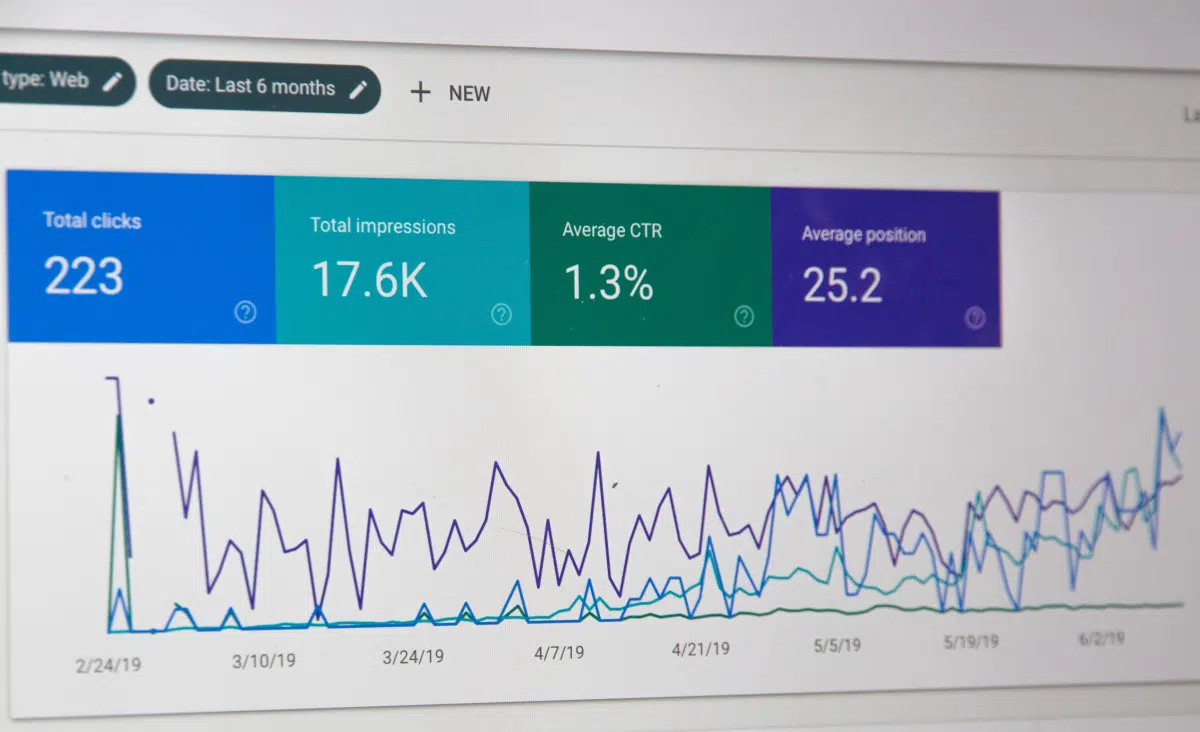
With such a huge focus on convenience, it's never been more important to get on the first page for the relevant keywords that your dream customers are searching for.
Getting on page 1 is all well and good, but not if it's for words and phrases that your ideal clients would never search for.
For example, if you're a clothing brand but you're only appearing in Google searches for shoes, that's not going to help you sell your new line of jumpers.
Another example is when you're page 1 for your own business name (e.g. Sway Digital) but nothing else. This means that only people who already know your business are going to find you, not new prospects.

Keywords are directly linked to your goals - It might sound obvious, but there are many brands who simply don't rank for words related to their products or services. So, a big part of hiring an SEO expert is determining the exact keywords and phrases that make the most sense for your business goals.
When done right, target keywords and content built around the needs of your ideal customer attracts high quality traffic. And users who have searched for e.g. jumpers, and have actually found content they like about jumpers, are much more likely to stick around and explore your site further. This is more likely to result in a conversion of some kind - whether that's filling a form or buying a product.
Unlike social media adverts or pay-per-click, which stop working as soon as you stop paying, SEO is a long-term strategy with results that compound over time.
So, when you pay for an SEO expert to get your site up to scratch, you're investing in changes that reap rewards years later. And the backbone of a long-term SEO strategy is content.
How does SEO content create long-term results? - Whether you make content from scratch, or you add to what's already there, high quality content continues to draw traffic to your website months and years after being published. This includes a web page like your homepage or services page, but also digital marketing campaign pages, landing pages, and blogs.
For example, you may have published a blog two years ago and it was found for a specific search term. Then, users lingered on the web page, demonstrating your content was valuable enough to read. This activity was logged by a search engine, so the next time someone searched that particular phrase, your blog was displayed again. This next user has the same great experience, and slowly but surely your blog becomes the number one ranked web page for that search term.
Of course, this is a very simplified version of how it works. But the bottom line is that creating high quality SEO content builds its value over time. That's what makes SEO such a great return on investment, long term.
A business that never appears in search engines isn't one many people tend to trust. In this day and age, if you can't be easily found in a search engine, people tend to assume you don't exist.
Appearing higher in search engine rankings increases your trust and credibility with users. It says that you're easy to find information about, and this gives an air of transparency. And even if users don't click on your website, simply appearing in their list of options exposes your name to new eyes and boosts brand awareness.

Education builds trust - With all that in mind, it's important to appear for keywords that aren't just about your business, products, and services. The reason blogging and social media has become so popular is the need for companies to show their educational side too.
People look to brands to not only buy products, but to understand how they will fit into their lives. Content clearly showing why specific services are useful, who would need them, what they can be used for, and how, is just as important as a beautiful website filled with information about your business.
The more you can educate, rather than sell, the more genuine your brand will seem - and the more chance you have of appearing for some of the more niche topics your ideal client is exploring online.
Thanks to technical considerations, SEO encourages a better user experience across your website.
User experience covers everything from site speed and loading times, to the flow of users getting from A to B (with A the web page they arrive on, and B the web page you want them to end up on, e.g. a sign-up page or simply another bit of content).
The easier their journey through your content, the more likely they are to convert. Users who are rage-clicking on obsolete buttons, or who simply cannot find what they're looking for in a matter of seconds, have a higher chance of leaving your site and never coming back.
SEO considers mobile users too - With 70% of website users now operating on mobile, being mobile-friendly is no longer an option - it's a requirement. For several years now, Google has penalised websites who are not optimised for mobile users. Disappearing buttons, desktop-shaped displays that work terribly on mobile screens, and hard-to-navigate menus are just some of the common gripes that could let your site down on the mobile front. For any website hoping to be on the right side of a search engine, following guidelines for mobile friendliness is essential.

From improving your content and appearing for words your ideal clients are actually searching for, to designing mobile-friendly pages that load faster and are easily navigable - "doing the work" when it comes to SEO improves many facets of your digital presence.
And all of this puts you above a huge percentage of your competition. Many businesses don't invest properly in SEO, especially not long term. So, any effort to make an SEO strategy a core part of your business plan is a chance to get ahead of your competitors.

Another big reason our customers ask us about SEO is their lack of visibility to customers within a 30-mile radius.
There are around 5 million SMEs in the UK, but thousands feel invisible in their local vicinity. This becomes an issue particularly for services such as trades, wellness, beauty, and businesses with physical stores that need to attract footfall.
Local SEO is the practice of optimising your website specifically for being found by people in your local community. It considers many factors including your Google Profile, social media, local business directories, purpose-built location pages, and more.

As we explored in a previous blog post on SEO and content marketing, SEO integrates well with other marketing channels.
Most digital marketing strategies include SEO as a core channel, using it as a basis off which to build email, video, and social media efforts.
For example, your company may produce a monthly email newsletter that shares resources from your website. When this content is also search engine optimised, it effectively kills two birds with one stone. Not only is it gaining views from your email marketing, it's also attracting search engine users long after it's moved down the page in someone's inbox.
Plus, content read from your email newsletter may be shared via social media channels to attract more eyes to the page. This furthers the likelihood that a search engine will view the content as reputable and therefore positively impacts its SEO.

SEO in social media - Over recent years, social media has also become more aligned with historical SEO tactics. Today, social media works a lot like a search engine, with experts using hashtags and carefully written captions to target specific words searched by users.
As consumers, we're searching online via more channels than ever, to find the exact information we want - whether that's from service providers themselves or influencers on Instagram. For SEO success, your social media channels play an important part alongside your standard web pages.
Finally, carrying out SEO work is important from a cold, hard data point of view.
For many businesses, it's the only reason they ever got into measuring their website traffic and where it's all coming from.
Having an SEO strategy will always involve tracking and measuring your changes and actions over time, and building on what works rather than going in blind. It makes sure you're making data-driven decisions which affect all aspects of your marketing and business plan, not just Google (or other search engines).
For example, considering launching a new guide? Well, thanks to the extensive keyword research done by your SEO expert, you know exactly what your target audience is most likely to search for this time of year.
Plus, a quick content audit will tell you what your most popular articles have been over the last 12 months and what your readers may want to read. Conversely, it can tell you the topics to stay away from.
And that's just a start. Using the power of data gleaned from your SEO efforts can help you make informed decisions and improve your business ROI across all areas of your marketing.
If you're now thinking "I really get why SEO is important," the only thing left to do is work out how to build and execute your SEO strategy.
Make sure you check out our other blog posts for free tips on how to improve your site rank and overall SEO efforts.
And if it's professional support you're after, we offer businesses of all sizes an affordable and straightforward SEO package here at Sway Digital.
Sway helps you create and publish SEO content that's on brand and aligned with your goals, carrying out extensive keyword research and on-page optimisation across your whole site.
We look at your user experience, web design, local SEO, and help you boost enquiries for genuine, high quality leads online.
And of course, we handle all things technical optimisation so you don't have to waste hours wading through jargon on YouTube.
Book a call with us today and see what a consistent, expertly crafted SEO plan could look like for your unique business.

Written By
Founder, Sway Digital • MSc Digital Marketing Communications
Philip Beaumont is the founder of Sway Digital, a digital agency built to sway your audience - combining website design & development, SEO, paid advertising, and brand identity into strategies that move the numbers that matter. He holds an MSc in Digital Marketing Communications and works hands-on with every client, from strategy through to execution.
Connect on LinkedInReady to put this into practice?
Book a free strategy call and we'll show you exactly how this applies to your business.