
Organic Marketing
A practical starting sequence for SEO for SMEs with no strategy in place: fix indexing and tracking first, claim your Google Business Profile, target long-tail keywords, and build service pages before you build a blog.
Category
Organic Marketing
Published
11 September 2026
Read Time
9 min read
Summary
Starting SEO for an SME from zero means fixing indexing and tracking first, claiming your Google Business Profile, going after long-tail keywords instead of broad ones, and getting commercial pages right before you touch a blog. Write content so an AI search engine can pull a direct answer straight out of it, not just so Google can rank it. Order beats volume here - most SMEs spend months churning out content before the technical groundwork can even carry it.
Most small and medium businesses we speak to haven't done nothing on SEO - they've dabbled in a bit of everything, in whatever order came up. A blog post one month, a rebrand the next, a freelancer who tweaked the meta titles a couple of years back. The outcome is much the same as doing nothing at all: more than 70% of small businesses still can't crack page one of Google, even with search getting smarter by the year. SEO for SMEs was never about doing more of it - it's about doing the right things in the right order, starting with whatever's blocking everything else.
This post walks through where to start, and why sequence carries as much weight as the individual tasks themselves. Get the order wrong and you're left with a blog nobody reads, sitting on top of a site Google can barely crawl - a familiar outcome for SMEs building out organic marketing without a clear sequence to follow.
A site running with no SEO strategy isn't losing customers to rivals who are simply better at SEO - it's losing them to rivals who just turned up. Google can't put a business in front of searchers if it can't read that business properly, and once a search has passed you by, it doesn't come back around.
The scale of this is bigger than most SME owners realise. Over 70% of small businesses still don't break page one, despite algorithms getting better at spotting genuinely useful content, not worse. That gap isn't about budget - it's about sequence. Businesses pour their limited hours into content and social before ever fixing the technical issues stopping Google from indexing the site in the first place.
Tip: before you write a single blog post, check whether your key pages are even indexed. Run site:yourdomain.com in Google and compare what comes back with what you'd expect to see there.
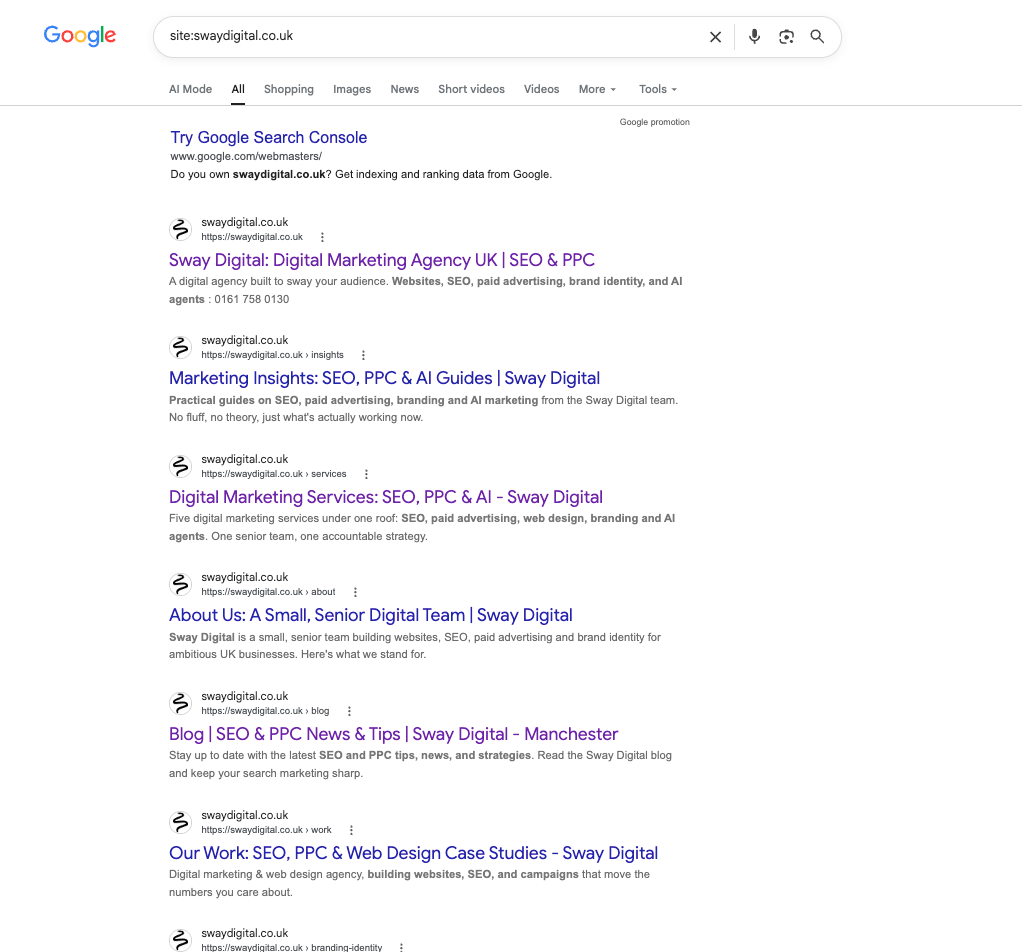
The opening move in SEO for SMEs is a technical audit, not a content plan - copy built on a broken technical base never gets a fair shot at ranking, no matter how good it is. A 12-month roadmap built around SME resourcing puts the technical groundwork in months one and two for exactly this reason: indexing, tracking and site speed all need to work before anything else is worth building.
In practice, that looks like:
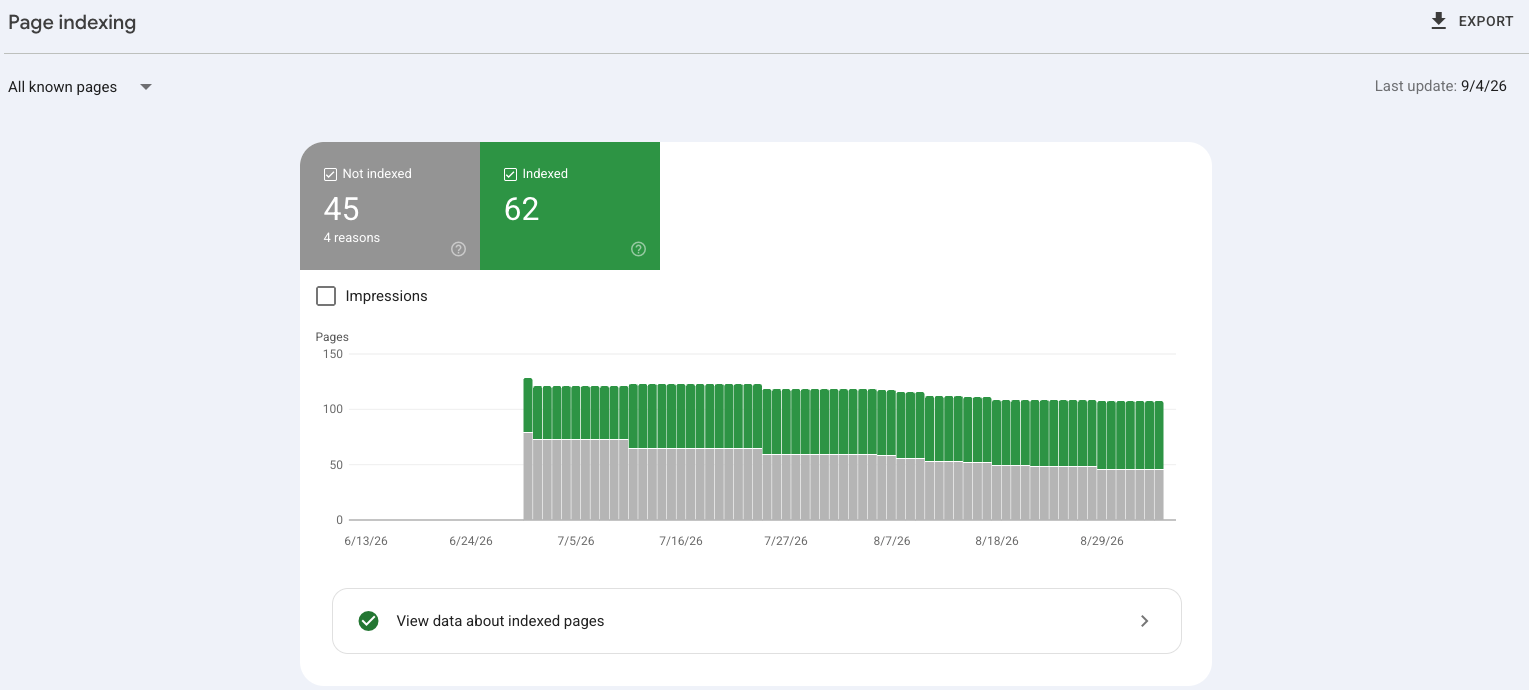
We treat Google Search Console as the backbone of every audit we run - it's the one tool that tells you, in Google's own words, exactly what's keeping your pages from being found. A structured audit approach also forces the right priorities - crawl and indexing problems get sorted before a penny goes near new content or paid campaigns, because they set the ceiling for everything built on top. Nail this first, and every piece of content published afterwards actually stands a chance.
If your SME serves a specific area, your Google Business Profile is worth more than your first three months of content put together - and most businesses haven't even claimed it yet. Only around 35% of small and mid-sized businesses have claimed their Google Business Profile, which means the single most valuable free local search tool sits idle for most of your competitors too.
Claiming and verifying the listing takes about twenty minutes. Getting it working properly takes a little longer:
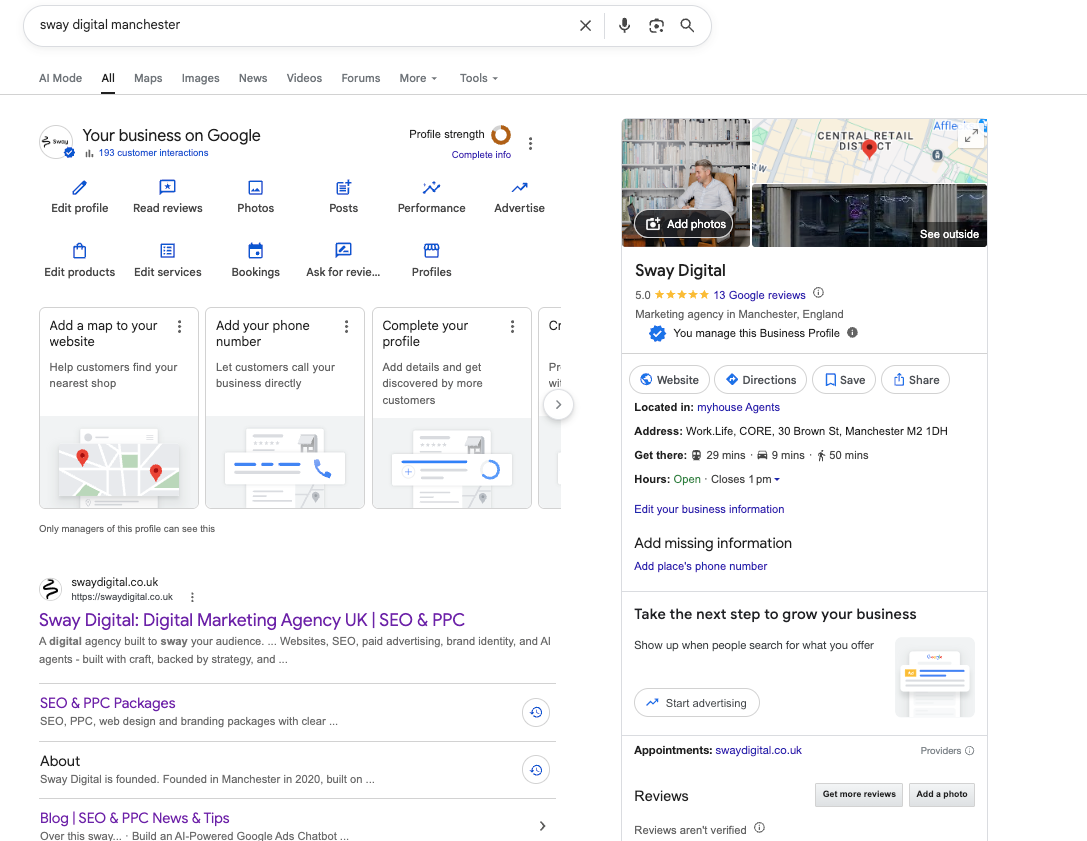
This is genuinely the highest-value hour you can spend if any slice of your customer base searches locally. It's also the one step most competitors skip, which makes it that much easier to get ahead of them. We cover this in more depth in our local SEO checklist for small business.
Keyword research for an SME without budget for enterprise tools should start with long-tail terms, not the broad, fiercely contested phrases everyone assumes they have to chase. The long-tail approach is the highest-ROI starting point for small business SEO precisely because these searches convert far better - the person typing them is describing their exact problem, not window-shopping.
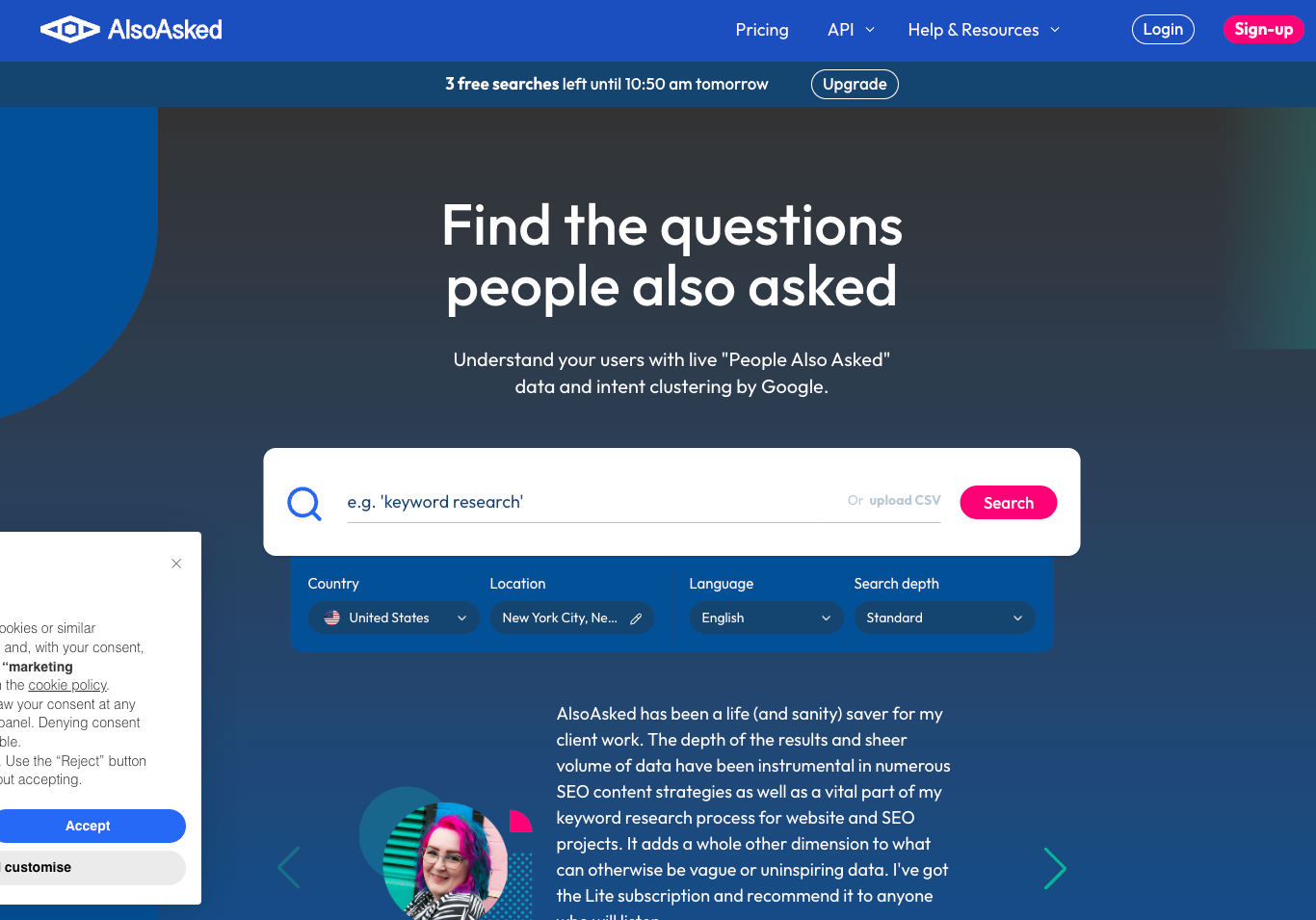
You don't need Ahrefs or SEMrush on day one. Google's own Keyword Planner, the "People also ask" boxes on the results page, and a chat with whoever answers your phones will hand you a working list of real customer language before you spend a penny on tooling.
Tip: ask your front desk or booking staff what customers actually say when they ring up. Those exact phrases - not marketing-speak - are your strongest long-tail keywords.
Commercial pages bring in revenue faster than blog content, so get them built and fixed before content production even starts. This is one of the most common sequencing mistakes we come across in SEO for SMEs: businesses publish twenty blog posts while their actual service pages - the ones a buyer lands on right before converting - stay thin, outdated, or missing proof altogether.
A strong service page needs a clear description of what you do, real proof points (client numbers, case studies, certifications), a direct call to action, and internal links through to related services and relevant content. Putting business pages ahead of supporting content is exactly the sequence that roadmap recommends for months three to six, once the technical groundwork is in place. Content still matters here - it's just not where you begin.
Picture the buyer journey backwards. Someone who's already decided they need what you offer searches a specific service term, lands on your page, and either finds proof you can deliver or heads off to check a competitor instead. A blog post further up the funnel can sit for another few weeks - a weak service page is costing you customers right now.
SEO for SMEs in 2026 goes beyond ranking in Google's traditional results - it's about becoming the source an AI system reaches for when it builds its answer. AI search rewards clarity, specificity and real expertise over ad spend, which is genuinely good news if you're smaller - a narrow, well-answered question can beat out a much bigger competitor's vague, keyword-stuffed page.
To get cited, content needs a direct, self-contained answer near the top of the section, written in plain language rather than marketing copy. AI systems interpret and summarise content rather than simply indexing it, so the vague framing that once worked for keyword rankings does nothing for AI answers. We go into this in more depth in our guide to AI Overviews in Google Search, including how the format shifts what "ranking well" actually means.
This matters for an SME starting from zero because it's a chance to build the right structure from day one, rather than retrofitting years of poorly structured content further down the line.
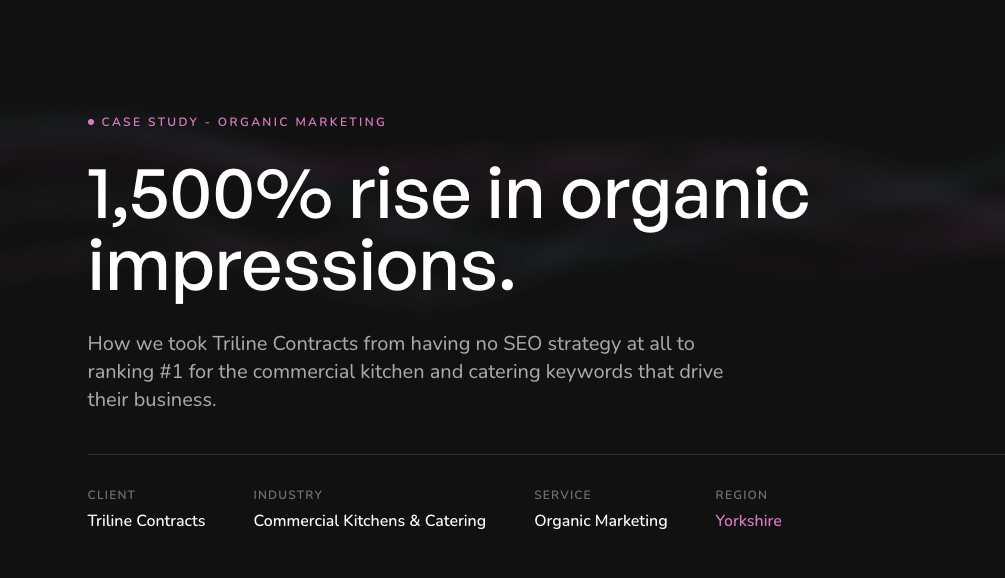
Triline Contracts, a commercial kitchen manufacturer, had no SEO strategy whatsoever when we started working together - no keyword targeting, no content plan, and service pages that didn't reflect what buyers were actually searching for. We ran competitor benchmarking to pin down where the gaps sat, then built new SEO-optimised category pages around the terms buyers genuinely used.
The result: a 1,500% rise in organic impressions, a 40% improvement in average position, and #1 rankings for "catering fabrications," "commercial kitchen designs," and "food servery counters" in their target region. None of it came from pumping out content - it came from getting the sequence right: understand the market, build the right pages, then earn the visibility. Read the full Triline Contracts case study for the complete method.
Starting SEO for SMEs with no strategy in place isn't about tackling everything at once - it's about handling the technical basics first, claiming the free tools sitting unused, and building content that answers real questions in the right order. Get the sequence right and each stage makes the next one work harder for you.
Three takeaways: fix indexing and tracking before writing a word, claim and properly fill out your Google Business Profile this week, and build service pages that can actually convert before scaling up content. None of this needs a big budget - it needs doing in an order that compounds, rather than all in one go.
If you'd rather have someone map this out for your specific site, book a free 30-minute strategy call and we'll walk through exactly where your priorities should sit. Or, if you want to know how ready your site is for AI search specifically, get the free Answer Engine Optimisation report and see whether ChatGPT, Perplexity and Google AI can actually find and recommend you.
What's the first step in SEO for SMEs with no existing strategy?
Run a basic technical audit before anything else - check whether your key pages are indexed in Google Search Console, confirm GA4 is tracking correctly, and fix any redirect chains or duplicate URLs. Content built on a broken technical foundation won't rank, however good it is.
How much does SEO cost for a small business starting from scratch?
You can start with free tools - Google Search Console, GA4 and Google Business Profile all cost nothing. Paid keyword research tools earn their keep once the basics are validated and you're ready to scale up content production.
Should an SME with no SEO history focus on local SEO first?
If your business serves a specific area, yes - Google Business Profile optimisation really is the highest-value first step, since most competitors haven't claimed or optimised theirs properly either.
How long does it take to see results from SEO when starting with nothing?
Technical fixes can lift indexing within weeks. Meaningful ranking movement on competitive terms typically takes three to six months, which is why sequence - fixing the foundation before scaling content - matters more than moving fast on any one tactic.
Does AI search change how an SME should approach SEO from the start?
Yes - content now needs to answer questions directly and clearly enough for an AI system to lift and cite it, not just rank in traditional search. Building that structure in from the beginning is far easier than retrofitting it into years of existing content later.

Written By
Founder, Sway Digital • MSc Digital Marketing Communications
Philip Beaumont is the founder of Sway Digital, a digital agency built to sway your audience - combining website design & development, SEO, paid advertising, and brand identity into strategies that move the numbers that matter. He holds an MSc in Digital Marketing Communications and works hands-on with every client, from strategy through to execution.
Connect on LinkedInReady to put this into practice?
Book a free strategy call and we'll show you exactly how this applies to your business.