
Organic Marketing
A practical local SEO checklist for small business: Google Business Profile, NAP consistency, schema markup, reviews and tracking, built around what's actually driving local rankings in 2026.
Category
Organic Marketing
Published
6 September 2026
Read Time
9 min read
Summary
A local SEO checklist for small business needs to cover four areas: a fully optimised Google Business Profile, consistent NAP data across every citation, on-page schema markup, and a steady flow of reviews. Google Business Profile alone carries roughly a third of local ranking weight, and the same signals now shape whether AI tools recommend you too. This checklist covers exactly what to do, in priority order.
Google Business Profile now carries roughly a third of the weight behind local search rankings on its own, according to the 2026 Whitespark Local Search Ranking Factors survey - and the same signals it's built on are increasingly what AI tools use to decide who to recommend, not just what Google shows in the map pack. If you're working through a local SEO checklist for small business in 2026, that's the order of priority worth following.
This checklist is the companion to our complete guide to organic marketing for small business, narrowed down to exactly what to do for local search specifically. Four areas matter: your Google Business Profile, NAP consistency across citations, on-page schema markup, and reviews. Work through them in that order and you'll cover the vast majority of what actually moves local rankings.
Free Download
Pop your email in and we'll unlock the free PDF version of this checklist - the same four areas, laid out as a physical to-do list you can work through offline.
Something went wrong - please try again, or email info@swaydigital.co.uk and we'll send it straight over.
A proper local SEO checklist for small business covers four areas in priority order: Google Business Profile optimisation, NAP consistency across citations, on-page schema markup, and a review generation process. Miss any one of the four and the others end up carrying more weight than they should.
Most checklists you'll find online list twenty or thirty individual tasks with no sense of which ones actually matter most. That's not particularly useful when you're running a business and don't have unlimited time to spend on it. The order above reflects where the ranking weight actually sits, not just what's easiest to tick off.
It's also worth being clear about what this checklist won't cover. Broader organic marketing - content strategy, digital PR, general on-page SEO - is covered in full in the pillar guide this post sits under. This is specifically the local layer on top of that.
Google Business Profile is the single biggest lever in local SEO, currently weighted at around 32% of local ranking factors according to Whitespark's 2026 survey of 47 local SEO specialists - more than any other individual factor across local pack rankings, organic local SEO, or conversions.
The basics matter more than people expect. Your business name should match your legal name exactly, with no keywords stuffed in - Google actively suspends listings for this in 2026. Choose the most specific primary category available rather than a broad one, complete every field including hours, services and attributes, and add a local phone number rather than a national or toll-free line.
Photos carry more weight than most small business owners realise. Listings with recent, genuine photos of the premises, team and completed work consistently outperform listings using stock imagery or nothing at all, and Google's own data shows profile actions - calls, direction requests and website clicks - grew 41% year-on-year as more local intent moves through Google Business Profile directly rather than a standard search result.
Tip: post to Google Business Profile at least weekly. It's a small task, but profiles posting updates regularly show measurably more engagement than static ones that were set up once and never touched again.
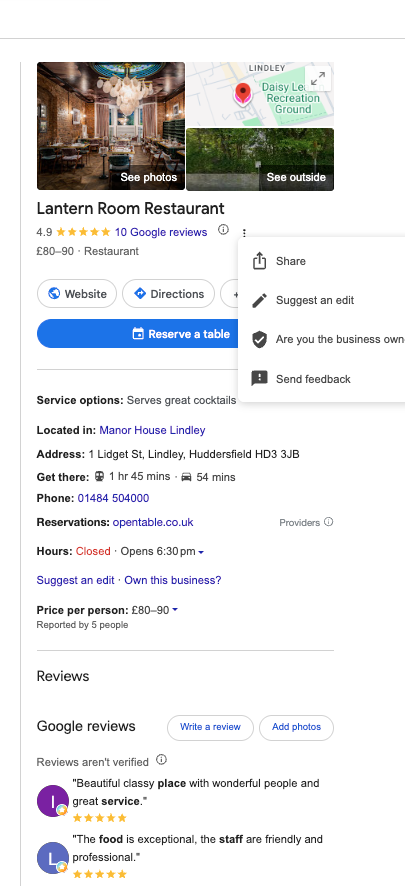
NAP consistency means your business Name, Address and Phone number appear identically across every citation online - your website, Google Business Profile, Facebook, Yelp, industry directories and local chamber listings. Inconsistencies confuse Google about which version is correct, and that uncertainty shows up as lower local rankings.
The most common mistakes are small ones. "Street" on your website but "St." on a directory, an old phone number still live on a listing you forgot existed, or a suite number missing from one citation but present on another. None of these look serious individually, but Google treats each inconsistency as a small trust signal working against you.
The practical fix is a straightforward audit. Search your business name plus your city, check every result on the first two pages, and note down anywhere the details don't match exactly. Update each one directly, starting with the highest-authority platforms - Google Business Profile, Apple Maps, Bing Places and Facebook - before working down to smaller industry-specific directories.
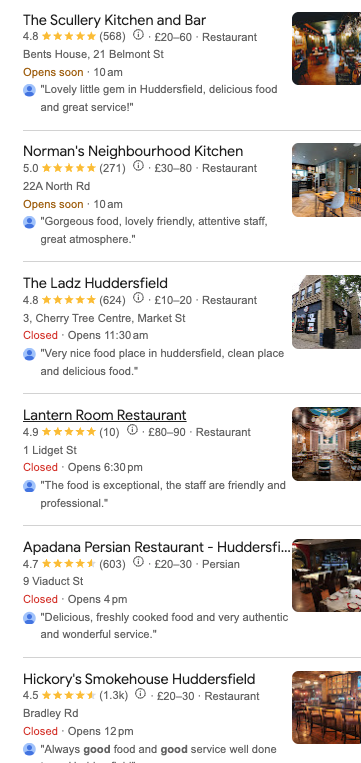
On-page local SEO means adding LocalBusiness schema markup and building dedicated location or service pages, so Google can read your address, hours and service area directly from the page code rather than inferring it from your Google Business Profile alone.
Google's own documentation on LocalBusiness structured data covers the specific properties worth marking up - name, address, geo-coordinates, opening hours and price range at minimum. This is a genuinely low-effort task with a real payoff, since it's what allows Google to show the richer local result types rather than a standard blue link.
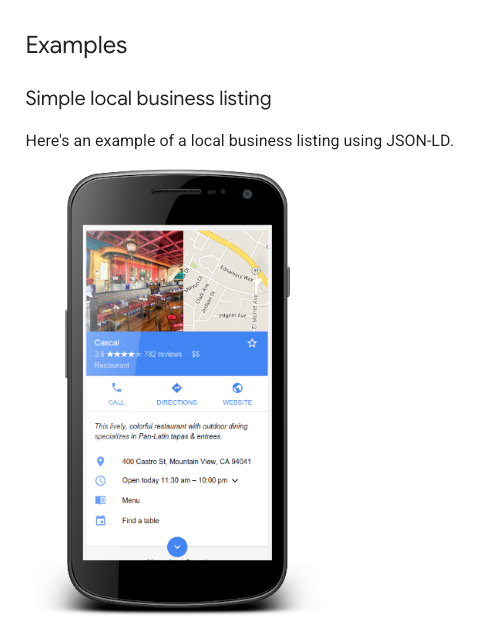
We've seen the on-page side of this deliver results directly. Picture Smiths, a branding agency competing for "Design Agency Huddersfield," went from position 75 to position 1 and grew organic traffic 5x, entirely through technical SEO fixes and a targeted local keyword push rather than any paid spend. A generic "About Us" page doesn't do this. A page built around the specific service and specific location does.
Tip: if you serve more than one location or offer multiple distinct services, build one dedicated page per service-location combination rather than one page trying to cover everything. It's more work up front, but each page gets to rank for its own specific search rather than diluting relevance across a single catch-all page.
Reviews influence local rankings and, increasingly, whether AI tools recommend your business at all. The 2026 BrightLocal Local Consumer Review Survey found that 97% of consumers now read reviews before choosing a local business, and use of tools like ChatGPT for local recommendations jumped from 6% to 45% in a single year.
That second stat is the one worth paying attention to. Google isn't the only one reading your reviews anymore - AI tools summarising local recommendations pull from that same review sentiment, so a thin or outdated review profile now carries consequences beyond your local pack ranking too.
A review generation process doesn't need to be complicated. Ask every satisfied customer directly, ideally with a QR code or a direct link that takes them straight to the review form rather than making them search for your listing. Respond to every review, positive or negative, within a couple of days - slow or generic responses are increasingly read as a red flag by consumers, and now by the AI tools reading the same page.
Local content is more defensible against AI Overviews than generic informational content, because AI Overviews currently appear on only around 7% of local searches compared to roughly 48% of search queries overall. That gap makes local-specific content one of the more reliable places to keep earning organic clicks.
This matters because it changes where content effort is best spent. A generic "how to choose a [service]" article competes with every other generic article on the same topic, and increasingly loses its click-through to an AI Overview that's already summarised the answer. A location-specific page about your service in your specific area has far less competing content for an AI Overview to summarise from, so it keeps earning clicks that a generic page increasingly won't.
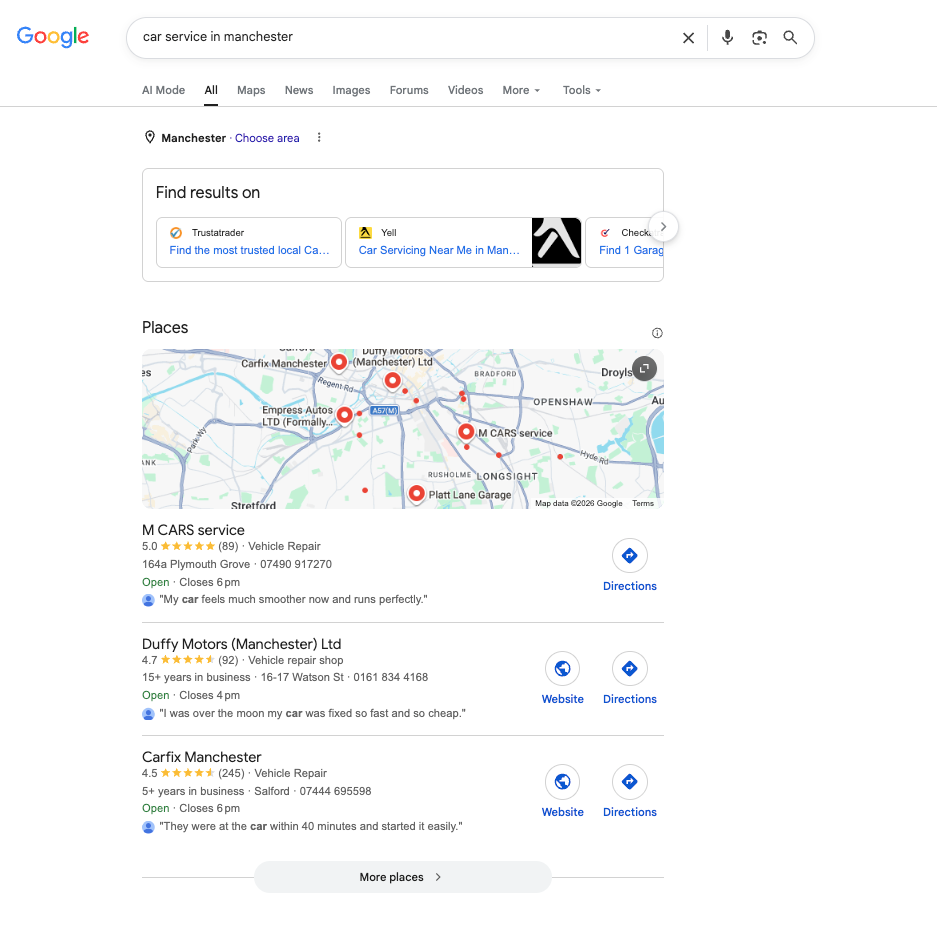
Tracking local SEO means watching Google Business Profile insights alongside Google Search Console data for location-specific queries, rather than relying on overall traffic numbers that blend local and non-local search together.
Google Business Profile's own insights panel shows calls, direction requests, website clicks and booking actions directly, which is a cleaner read on local intent than website analytics alone. Search Console adds the missing piece - filter for queries containing your city or service area, and you'll see impressions and click-through specifically for local-intent searches, separate from your broader organic performance.
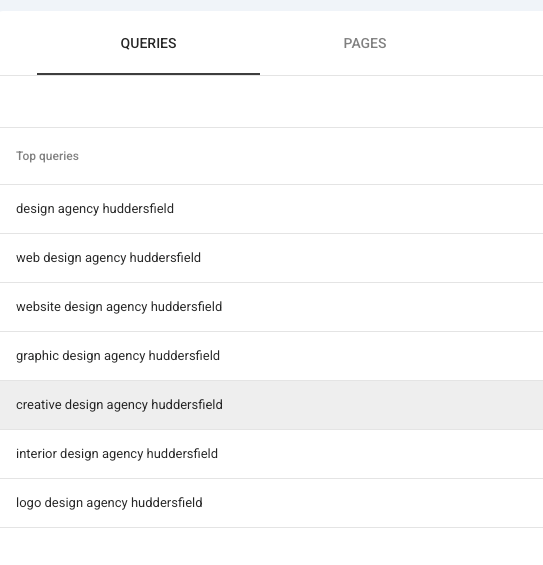
Tip: review this monthly for the first quarter after working through this checklist, then quarterly once things have settled. Local ranking changes tend to show up faster than broader organic SEO changes, often within four to six weeks of fixing NAP inconsistencies or completing a Google Business Profile.
Working through a local SEO checklist for small business doesn't need to mean chasing thirty tasks in no particular order. Get Google Business Profile fully optimised first since it carries the most weight on its own, fix NAP consistency across your citations second, then layer in schema markup and a proper review process. Track it through Google Business Profile insights and Search Console rather than guessing.
If you'd rather have this built and maintained for you, book a free 30-minute strategy call and we'll look at where your current local presence stands. And if you're wondering whether AI tools like ChatGPT and Perplexity can currently find and recommend your business at all, get the free Answer Engine Optimisation report - it covers the AI visibility side this checklist doesn't.
What's the single most important item on a local SEO checklist for small business?
A fully optimised Google Business Profile, since it's currently weighted at around 32% of local ranking factors, more than any other single factor. Accurate categories, complete fields, regular posts and genuine photos all feed into this.
How long does it take to see results from local SEO?
Local ranking changes tend to move faster than broader organic SEO, often within four to six weeks of fixing NAP inconsistencies or completing a Google Business Profile setup. Full results, including review volume and content authority, typically build over three to six months.
Do I need a website page for every location if I only have one premises?
No. Dedicated location pages matter most for businesses with multiple locations or clearly defined service areas. A single-location business is better served by making sure that one page is fully optimised with schema markup and local keywords, rather than creating artificial location pages that don't add real value.
Does NAP consistency really affect rankings, or is it a minor detail?
It affects rankings directly. Google treats inconsistent business details across citations as a trust signal working against you, since it creates uncertainty about which version of your information is correct. It's a small fix with a genuinely outsized impact for the effort involved.
Can AI tools like ChatGPT actually recommend my business, or is that just for Google?
Yes, and it's growing fast - use of AI tools for local recommendations rose from 6% to 45% in a single year according to BrightLocal's 2026 survey. These tools draw on many of the same signals as Google, including review sentiment and listing accuracy, so the same checklist work benefits both.

Written By
Founder, Sway Digital • MSc Digital Marketing Communications
Philip Beaumont is the founder of Sway Digital, a digital agency built to sway your audience - combining website design & development, SEO, paid advertising, and brand identity into strategies that move the numbers that matter. He holds an MSc in Digital Marketing Communications and works hands-on with every client, from strategy through to execution.
Connect on LinkedInReady to put this into practice?
Book a free strategy call and we'll show you exactly how this applies to your business.