Insights - AI Agents
UK dental practices are missing up to a third of their patient calls. Here's why it's happening, what it's costing, and how an AI dental answering service fixes it - for a fraction of the cost of a receptionist.
Read Time
12 min read
Calls Missed Daily
Up to 35%
Don't Call Back
75% of missed callers
Starting Cost
From £500 / month
The Problem
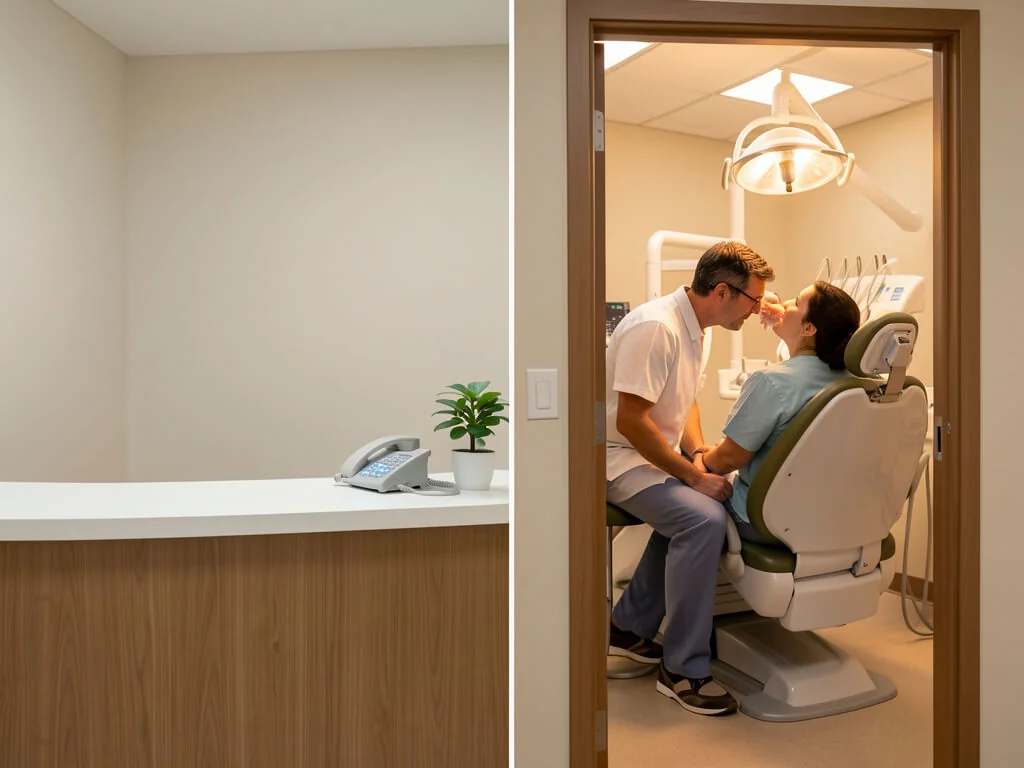
It's a Monday morning. Your dental chair is full. Your receptionist is working through a backlog of weekend emails, confirming a patient who's about to arrive, and updating the appointment book - all at once.
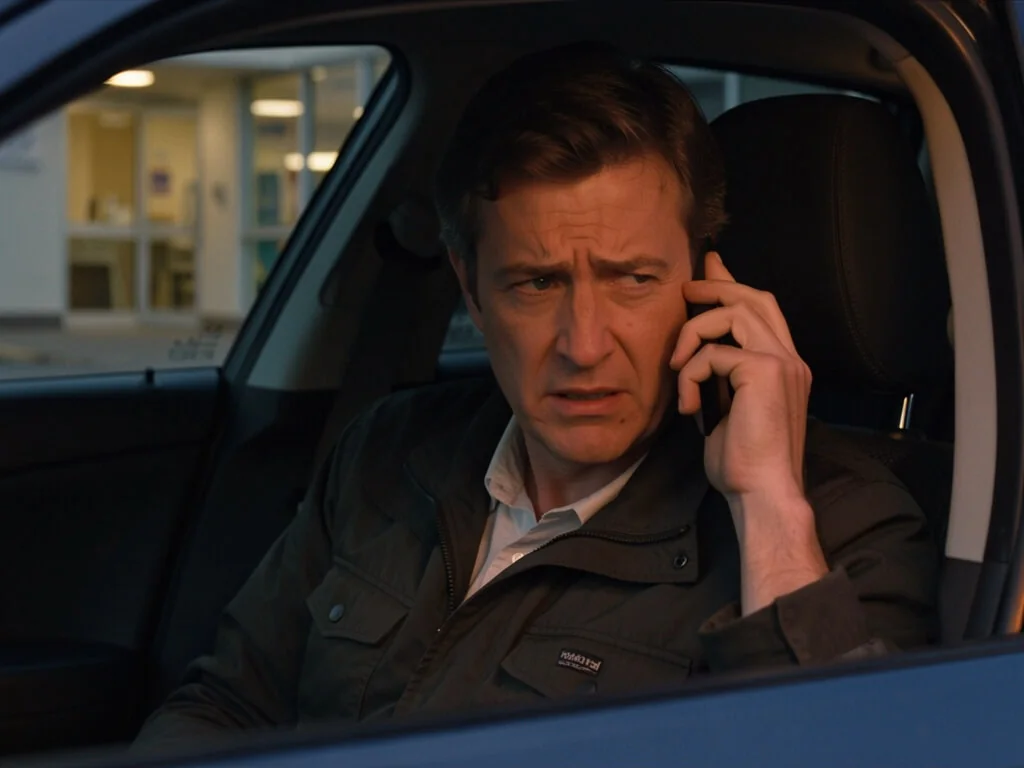
The phone rings. Three rings. Four rings. The caller hangs up.
That was, in all likelihood, a new patient - someone who finally got round to calling about the tooth that's been bothering them, found your practice on Google, liked your reviews, and was ready to book. Now they're dialling the next result on the list.
This happens in dental practices across the UK dozens of times every week. Research across the industry consistently shows practices miss between 30% and 35% of inbound calls on an average day - a figure that climbs sharply during peak periods like Monday mornings and lunch hours, when abandonment rates can reach 25% or more. A dental answering service, particularly one powered by AI, exists to solve this exact problem - not by adding headcount, but by giving your practice a front desk that genuinely never misses a call.
What Is It?
A dental answering service answers your practice's calls when your team can't - or after hours when the practice is closed. The older version of this is an outsourced call centre staffed by humans: restricted hours, per-minute billing, and agents who don't know your practice.
The newer version is an AI dental answering service: a voice AI agent that answers inbound calls automatically, holds a genuine two-way conversation, books or reschedules appointments in real time, and sends an SMS confirmation - with no human involvement. Unlike voicemail, it doesn't ask patients to leave a message and wait. Unlike a phone menu, it doesn't make them press numbers. The patient dials, the AI answers, and the booking is usually done inside two minutes. It's the same pattern we see in community pharmacies, where routine calls are just as predictable and just as costly to leave unanswered.
What it handles
The Real Cost
Most practice owners think of a receptionist's cost as the number on the payroll. That's understandable - it's the figure you see every month. But it's only part of what a dental receptionist actually costs your practice each year.
According to Glassdoor data updated to December 2025, the average UK dental receptionist earns £20,799 per year, rising above £22,593 for experienced staff in London. On top of that base salary, you pay employer National Insurance (15% above £5,000 following the April 2026 budget changes), a minimum 3% workplace pension contribution, cover for the 28 days of annual leave and 5.7 average sick days UK employees take each year, and recruitment costs that industry estimates put at 20–30% of first-year salary every time you need to replace someone.
| Cost component | Annual estimate |
|---|---|
| Base salary (UK average, Glassdoor Dec 2025) | £20,799 |
| Employer NICs (15% above £5,000) | £2,400 |
| Pension contribution (3%) | £470 |
| Recruitment cost (averaged over 2 years) | £3,150 |
| Training and onboarding time | £1,200 |
| Lost productivity during sick days | £600 |
| Total true annual cost | £28,619+ |
And that's before the core limitation: a human receptionist can only answer one call at a time, works around 37.5 hours a week, and is unavailable on evenings, weekends, and bank holidays. An AI dental answering service starts from £500 per month. The comparison isn't subtle - see our full AI vs human receptionist comparison for the complete breakdown.
Patient Impact
This is the part of the missed-calls problem most practices genuinely don't see. You know when a patient doesn't show up for an appointment. You don't know when a patient called, got no answer, and booked elsewhere.
An analysis of over 8 million patient conversations by TrueLark found that 58% of missed call interactions in dental practices involve new patients - people who don't yet have a relationship with your practice, choosing between you and a competitor at the exact moment their call goes unanswered. Around 75% of patients whose calls go unanswered never call back. And roughly 47% of appointment requests arrive outside standard opening hours - nearly half of your potential bookings landing when your phone points straight to voicemail.
The numbers that matter
How It Works
01
The patient dials your existing practice number. Instead of ringing through to a desk phone or hitting voicemail, the call connects to the AI within two seconds - no hold music, no voicemail prompt, an answer every time.
02
It opens with a greeting configured to your practice - your name, your tone, and any relevant service information. It sounds like a professional answering the phone, not a menu.
03
"I'd like to book a check-up," or "I need to move my appointment on Thursday," or "I'm in pain and need to be seen urgently." The AI understands the intent behind whatever's said - it isn't listening for trigger phrases.
04
The AI connects to your live appointment calendar, checks availability, offers suitable slots, confirms the choice, and captures the patient's name and number - all inside the call. Your appointment book updates immediately, with no manual step.
05
Once the call ends, the patient gets an SMS with their appointment date, time, and practice address - which alone measurably reduces no-shows.
06
A well-configured system knows when a patient needs a person. Callers describing acute pain, swelling, or trauma are escalated straight to your on-call contact - the AI doesn't attempt to manage a dental emergency, it gets the patient to the right person, fast.
Built By Us
This isn't theory for us. Sway Digital works with healthcare and dental clients every day, and we hit this exact problem ourselves - calls going unanswered while we were busy doing the work. We installed our own AI phone receptionist, built through our sister venture Avai, and the difference was immediate.
"We built it because we had the same problem our clients do - calls going unanswered whilst we were busy doing the work. The difference was immediate: more consultations booked, zero missed calls, and not a single lead lost to voicemail."- Philip Beaumont, Founder, Sway Digital & Avai
AI vs Human
An AI dental answering service excels at routine, repeatable call types - bookings, rescheduling, cancellations, opening hours, directions, and pricing enquiries - at any time of day, without fatigue or variation in quality, as covered in our complete guide to AI answering services. The out-of-hours capability is where the return is most immediate: for an average practice taking 40 calls a day, that's a conservative 15–20 extra contacts recovered every week, calls that currently go to voicemail and are rarely followed up.
Human contact still matters for complex complaints and patient welfare concerns - a distressed or unhappy patient deserves a person who can make real decisions. It also matters for clinical judgement: an AI can confirm your opening hours and take a booking, but it shouldn't be advising a patient on whether their symptoms need urgent attention. That escalation path needs to be clear, tested, and reliable.
The smart model: let AI answer every call, let dentists and nurses focus on the patients in the chair, and let your receptionist handle the calls and relationships that genuinely need a person.
Compliance
Healthcare call handling carries regulatory weight some providers don't take seriously enough. Every call your AI answering service handles involves processing personal data - at minimum, the caller's number and what they say - so you need a lawful basis under UK GDPR (typically legitimate interests or performance of a contract for a booking call). The ICO's guidance on AI in healthcare sets out the key requirements clearly.
At the start of every call, the AI should identify itself as an automated system - both good practice and a matter of patient trust. Call transcripts are personal data too, so retention needs a clear purpose and a defined limit, reviewed alongside your existing clinical record retention rules.
Important
This section is general regulatory information, not legal or clinical advice. Seek independent guidance to confirm your specific deployment meets all requirements for dental healthcare providers in the UK.

Choosing A Provider
Not all dental answering services are built to the same standard - there's a wide gap between a genuinely capable AI voice system and a glorified voicemail with a friendlier greeting. Before committing, ask:

FAQ
Yes - the AI identifies itself as an automated system at the start of each call, in line with UK GDPR best practice. Most patients are entirely comfortable with this, particularly when the AI answers immediately and completes their booking quickly.
Patients describing acute pain, swelling, trauma, or any urgent concern are escalated immediately to your designated on-call contact. The AI does not attempt to manage a dental emergency itself.
Pricing for an AI dental answering service typically starts from £500 per month, with a one-off setup fee from £500 depending on practice complexity - versus a true annual cost of over £28,000 for a dental receptionist once NICs, pension, recruitment, and training are included.
Yes - it's available 24/7, 365 days a year, including weekends and bank holidays. Around 47% of dental appointment requests arrive outside standard opening hours.
There's no limit on concurrent calls. On a busy Monday morning when several patients call at the same time, all of them get an immediate answer - no hold time, no engaged tone.
Wrapping Up
Missed calls are the single biggest source of hidden revenue loss in most UK dental practices - and one of the easiest to fix. An AI dental answering service costs a fraction of a receptionist's true annual cost, never clocks off, and turns the calls you're currently losing into booked appointments.

Written By
Founder, Sway Digital • MSc Digital Marketing Communications
Philip Beaumont is the founder of Sway Digital, a digital agency built to sway your audience - combining website design & development, SEO, paid advertising, brand identity, and AI agents into strategies that move the numbers that matter. He holds an MSc in Digital Marketing Communications and works hands-on with every client, from strategy through to execution.
Connect on LinkedInLosing Bookings to Missed Calls?
Book a free 30-minute strategy call. We'll talk through your goals and follow up with a clear plan.