Website Design & Development Organic Marketing Paid Advertising Branding & Identity AI Agents Digital Strategy Website Design & Development Organic Marketing Paid Advertising Branding & Identity AI Agents Digital Strategy

Insights - AI Agents

AI receptionist vs human receptionist: the complete UK comparison.

Everything UK business owners need to know about costs, compliance, how the technology works, and whether it's right for your business.

Read Time

13 min read

Lost to Missed Calls

£30bn a year, UK-wide

Don't Call Back

85% of missed callers

Starting Cost

From £500 / month

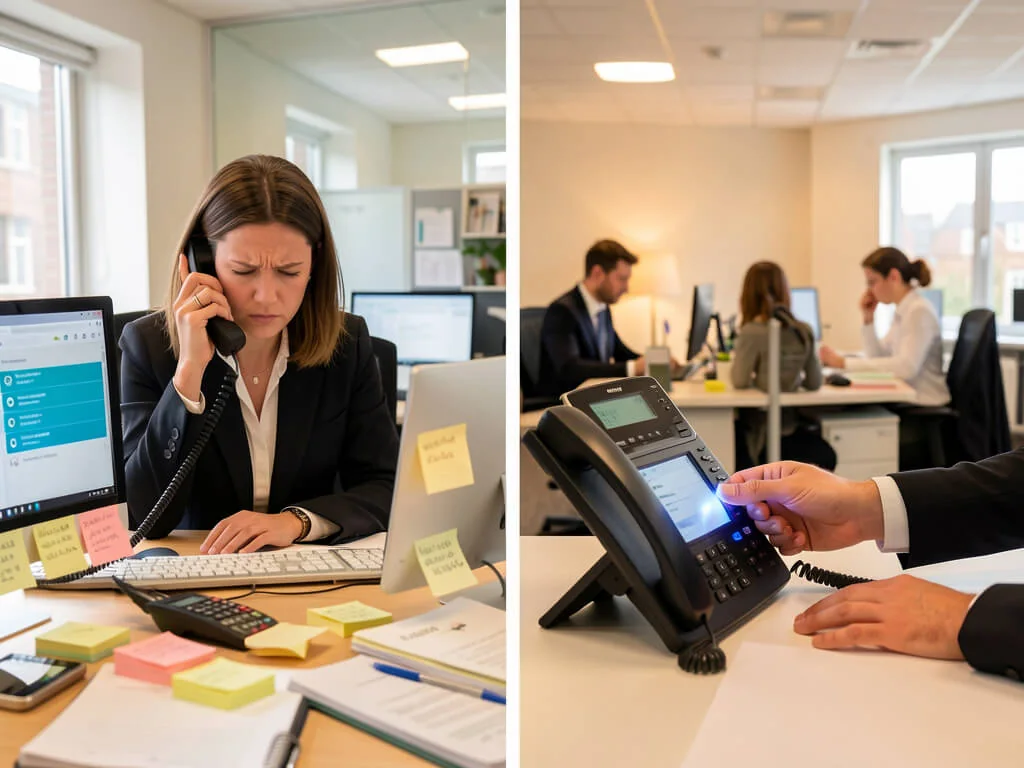
Stressed receptionist at a cluttered desk juggling calls, notes, and a busy office phone

The Problem

The call you're missing right now.

Your phone rings. You're with a client, in a meeting, or working in the back. No one answers.

That caller - a new patient, a potential client, a customer ready to book - waits a few seconds, then hangs up. Research published by Quality Company Formations found that 85% of people whose calls go unanswered will not call back. They move on to the next business on Google, and you never know they existed.

This isn't a rare occurrence. UK businesses collectively lose over £30 billion every year to missed calls. For a small or medium-sized business taking 20 inbound calls a day, missing even a quarter of them can translate into tens of thousands of pounds in lost revenue annually - and because those calls never show up in any report, the loss is completely invisible.

Run the maths on your own numbers: if your average job is worth £80, and you miss five calls a day across a five-day week, that's £400 a week in lost potential revenue - over £20,000 a year, using conservative figures. For higher-value services, the number is significantly larger. This guide covers what an AI receptionist actually is, what it costs, how it compares to a human member of staff, which industries benefit most, and how to stay compliant with UK regulations when you deploy one - for the broader category, see our complete guide to AI answering services.

What Is It?

What is an AI receptionist?

An AI receptionist is one of a broader family of AI voice agents - a voice-powered system that answers your business calls, handles caller enquiries, and books appointments automatically - with no human involvement. Unlike voicemail or a "press 1 for sales" menu, it holds a genuine two-way conversation: it listens, understands natural speech, responds in a natural-sounding voice, and takes action.

Modern AI receptionists use large language models to understand intent even when it's phrased in unexpected ways, and integrate with your booking software, CRM, and calendar in real time - no lag, no double bookings, no manual data entry afterwards.

What it can handle

  • Answering inbound calls around the clock - 24/7, 365 days a year
  • Booking, rescheduling, and cancelling appointments in real time
  • Answering frequently asked questions about your business
  • Collecting caller name, number, and enquiry details
  • Sending SMS appointment confirmations automatically
  • Escalating urgent calls to a human immediately
  • Logging every call with a full transcript for your records
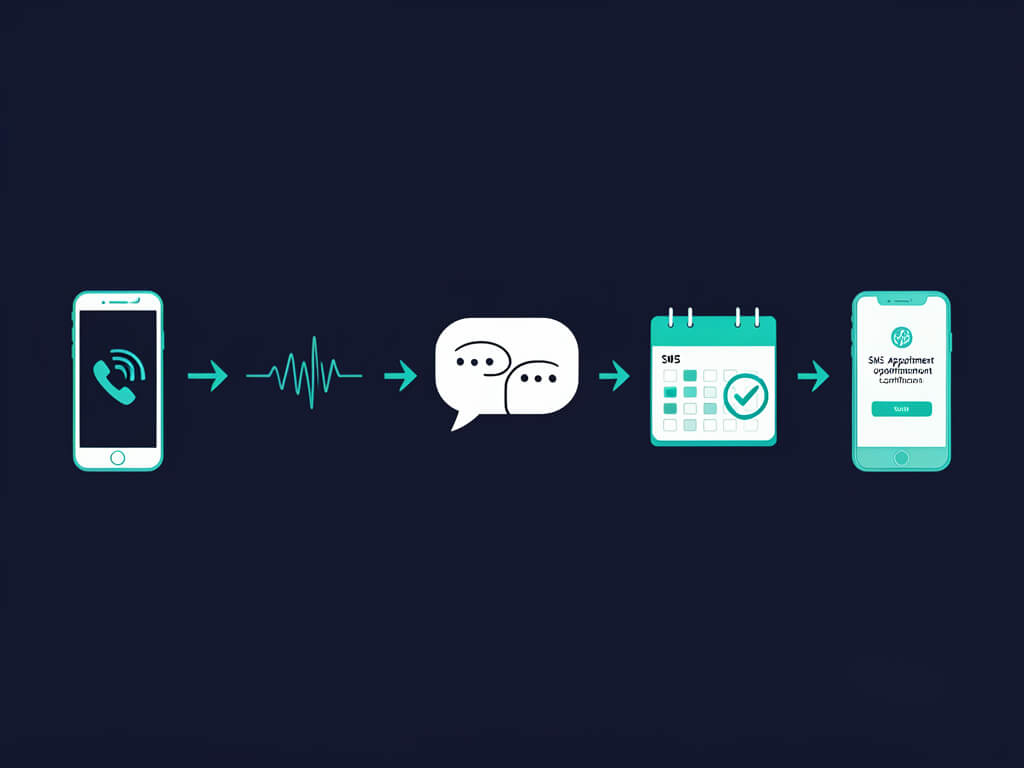
Diagram showing an inbound call flowing through an AI receptionist to a booked appointment and SMS confirmation

The Real Cost

The true cost of a human receptionist.

Most business owners think of a receptionist's cost as the number on the payroll. That's understandable - it's the most visible figure. But it's only part of the picture.

According to CV-Library, the average UK receptionist salary in 2026 sits between £24,000 and £29,000 a year, with London roles frequently reaching £25,500 or more. On top of that base figure, you're legally required to pay employer National Insurance (15% above £5,000 following the April 2026 budget changes), a minimum 3% workplace pension contribution, and cover for the 28 days of statutory holiday plus the 5.7 average sick days UK employees take each year. Recruitment costs - estimated by the British Business Bank at 20–30% of first-year salary - add up fast every time you need to replace someone.

Cost component Annual estimate
Base salary (mid-range)£26,000
Employer NICs (15% above £5,000)£3,150
Pension contribution (3%)£620
Recruitment (once every 2 years, averaged)£3,900
Training and onboarding time£1,500
Lost productivity during sick days£700
Total true annual cost £35,870+

This doesn't include overtime, benefits, desk space, or the coverage gap: a human receptionist is typically available around 7.5 hours a day, 5 days a week - about 1,875 hours of cover a year. Every call outside those hours, on evenings, weekends, or the lunch break, goes unanswered. The true cost of a human receptionist for most UK businesses is closer to £35,000–£40,000 a year - before a single missed call.

The Comparison

AI vs human: the full comparison.

A direct, side-by-side breakdown across 16 operational factors - real differences, not abstract technology claims.

Category AI Receptionist vs Human Receptionist
CostFrom £500 a month£25,000+ salary + NI + pension + holiday + sick pay
CostNo recruitment or onboarding costsWeeks of hiring, training, and probation risk
Always OnAvailable 24/7, 365 days a yearOffice hours only - typically 9–5, Mon–Fri
Always OnBooks appointments at 11pm, weekends & bank holidaysMissed calls go to voicemail - rarely converted
Always OnNo lunch breaks, toilet breaks, or personal callsUnavailable up to 2 hrs/day on breaks
ReliabilityZero sick days or staff turnoverAverage UK employee takes 5.7 sick days/year
ReliabilityConsistent, professional tone on every callVaries by mood, stress levels, or call volume
ReliabilityAutomatically sends SMS confirmations every timeEasy to forget or skip under pressure
Fewer ErrorsNo double bookings - syncs to calendar in real timeManual calendar management prone to overlap
Fewer ErrorsNever mishears a name, number, or timeTranscription errors common on busy days
Fewer ErrorsFollows the exact same process on every callProcess varies by individual; training gaps possible
GrowthCaptures bookings that would've gone to voicemailMissed calls = missed revenue, often permanently lost
GrowthHandles multiple calls simultaneously - no engaged toneOne receptionist = one call at a time
GrowthFrees staff to focus on in-person customer experienceStaff pulled between phone and in-person duties
ExperienceZero hold time - immediate answer every timeCallers frequently placed on hold
ExperienceEvery call logged - peak times, queries & trends capturedNo structured data capture from phone calls

A few points from the table deserve extra attention, since they're the ones business owners tend not to consider until it's too late.

The simultaneous calls problem

A human receptionist can take one call at a time. When two people ring at once, one goes on hold - or hangs up. An AI receptionist handles multiple concurrent calls with no engaged tone, wait time, or drop in quality. For a busy Monday morning, that's the difference between capturing every enquiry and routinely losing a percentage of them.

The consistency advantage

Human receptionists are, by nature, human - tone varies with how busy they are and how the day's gone. An AI receptionist delivers the same professional, attentive experience on the 200th call as the first. Every caller gets the same quality, no exceptions.

The data capture difference

What gets recorded from a human-answered call depends on how busy the moment is and what was volunteered. An AI receptionist logs every call with a full transcript, captures name and number, and records the enquiry - building a genuine dataset of call volume, peak times, and conversion rate that's essentially invisible to most businesses right now.

"We built it because we had the same problem our clients do - calls going unanswered whilst we were busy doing the work. We installed our own AI phone receptionist and the difference was immediate: more consultations booked, zero missed calls, and not a single lead lost to voicemail."
- Philip Beaumont, Founder, Sway Digital & Avai

How It Works

How an AI receptionist actually works.

01

The call arrives

A caller dials your business number. Instead of ringing through to a desk phone or mobile, the call routes to your AI receptionist - in under two seconds, invisibly to the caller.

02

The AI greets and listens

It answers with a greeting you've configured - your business name, your tone, any specific instructions - and the caller responds naturally, in their own words.

03

Natural language understanding processes the intent

The AI doesn't rely on a specific phrase. It understands natural speech - interruptions, corrections, accents, incomplete sentences - and identifies what the caller wants: to book, reschedule, or ask about pricing.

04

The AI takes action in real time

It connects to your live systems, checks the calendar for availability, offers times, confirms the booking, and captures caller details - all within the call, with no manual step required.

05

Confirmation and follow-up

Once the call ends, the system sends an SMS confirmation automatically, logs the call with a full transcript, and triggers any follow-up actions.

06

Escalation when needed

Well-configured AI receptionists know when to step aside. For complex complaints or situations requiring human judgement, the call transfers to a designated team member - there's always a clear escalation path.

Office phone and two colleagues in a meeting after a booking is confirmed

AI vs Human

When AI wins - and when humans still matter.

An AI receptionist isn't a replacement for every human function in your business - it's a replacement for a specific, costly one: answering the phone, taking details, and booking appointments. Being clear on that distinction is what makes it work well.

Out-of-hours availability is the clearest win - a human receptionist can't answer at 11pm or over a bank holiday, an AI can and does. Industry estimates suggest this alone captures an additional 15–20% of appointments that would otherwise be lost. Routine, repetitive calls - bookings, rescheduling, opening hours - follow predictable patterns AI handles without fatigue. High call volume is a third strong case: ten simultaneous callers create ten uninterrupted conversations, not a queue.

Complex complaints requiring empathy and nuanced judgement are not well-suited to AI - a distressed customer needs a person with the authority to make decisions in the moment. Relationship-critical first calls, particularly in high-value financial, legal, or specialist medical work, may also benefit from human contact.

The smart split for most businesses

Let AI answer every call. Let humans handle every conversation that genuinely requires a human. Stop using expensive human time to take appointment bookings a well-configured AI can handle in 90 seconds.

An office phone handling routine calls automatically while colleagues focus on a client meeting

Industries

Which industries benefit most?

AI receptionists deliver the greatest return in industries with high call volume, appointment-driven business models, and staff who can't always be free to answer the phone.

Healthcare & Medical

Dental practices, GP surgeries, clinics, and community pharmacies field huge call volumes. AI answers every call whilst clinical staff focus on patients.

Legal & Professional

Fee earners are in court or in meetings. Every missed call is a potential lost instruction - AI captures every new enquiry.

Trades & Home Services

Plumbers, electricians, and installers are on the job, not by a phone. AI books the callout while they're up a ladder.

Beauty & Wellness

Salons and clinics juggle a packed chair schedule. AI handles bookings and rescheduling without pulling staff off clients.

Property & Letting Agents

Viewing requests and tenant queries arrive at all hours for estate agents and letting agencies alike. AI qualifies and books viewings around the clock.

Hospitality & Restaurants

Reservation calls peak exactly when the front of house is busiest. AI takes the booking without anyone leaving the floor.

Built By Us

Built by people who use it every day.

This guide isn't written from the outside looking in. Sway Digital hit this exact problem ourselves - calls going unanswered while we were heads-down on client work. That's what led to building Avai, our own AI receptionist venture, and putting it to work on our own phone line before ever offering it to a client.

The result was immediate and measurable: more consultations booked, zero missed calls, and a lead source - the phone - that had quietly been leaking revenue for years, plugged. Everything in this guide reflects what we've actually seen running an AI receptionist ourselves, not just what a product page claims it can do.

Business owner reviewing their AI receptionist's call dashboard, satisfied with the results

Compliance

UK compliance: GDPR, ICO & PECR.

Every call your AI receptionist handles involves processing personal data - at minimum, the caller's number and what they say - so you need a lawful basis under UK GDPR, typically legitimate interests or performance of a contract for a booking call. The ICO's guidance on AI sets out the key requirements clearly.

At the start of every call, the AI should identify itself as an automated assistant - both good practice and a matter of caller trust. Call transcripts are personal data too, so retention needs a clear purpose and a defined limit.

The Privacy and Electronic Communications Regulations (PECR) matter most for outbound activity - if your AI receptionist sends outbound SMS confirmations or reminders, those messages need appropriate consent in place.

This section is general regulatory information, not legal advice. Seek independent guidance to confirm your specific deployment meets all applicable UK requirements.

Choosing A Provider

How to choose the right AI receptionist.

Before committing to a provider, ask:

UK business owner researching AI receptionist options from home

ROI

Calculating your ROI.

The calculation is simple: missed calls per week, multiplied by your average job value, multiplied by a realistic conversion rate. Most businesses are surprised by how quickly it adds up.

Missed calls / week

5

A conservative estimate for most SMEs

Average job value

£80

Adjust to your own typical booking value

Lost revenue / year

£20,800+

5 calls × £80 × 52 weeks

AI receptionist cost / year

From £6,000

Against £35,870+ for a human receptionist

Pricing

What does it actually cost?

Sway Digital's AI Agents service - including AI receptionists - starts from £500 a month, with setup scoped to your call volume, integrations, and how many workflows you want it handling. Compared to a true annual cost of over £35,000 for a human receptionist, most businesses see the case for switching within the first conversation.

FAQ

Frequently asked questions.

Will callers know they're speaking to an AI? +

Your AI receptionist identifies itself as an automated assistant at the start of each call - both best practice and a UK GDPR requirement. Most callers are entirely comfortable with this, particularly when the interaction is fast, accurate, and resolves their enquiry quickly.

Can it understand different accents? +

Yes - modern AI voice systems handle a wide range of UK regional accents effectively, including Scottish, Welsh, Northern Irish, and a broad range of English regional variations.

How much does an AI receptionist cost in the UK? +

Pricing starts from £500 per month, compared to the true annual cost of a human receptionist, which typically exceeds £35,000 once NICs, pension, recruitment, and training are included.

Can it handle multiple calls at the same time? +

Yes - there's no limit on concurrent call handling. If 10 people ring your business simultaneously, all 10 receive an immediate answer with zero wait time.

Do I need to change my phone number? +

No - your existing business number stays exactly as it is. Calls are routed to your AI receptionist through your existing phone setup.

Wrapping Up

The choice isn't AI or human - it's making sure every call gets answered. An AI receptionist costs a fraction of a human receptionist's true annual cost, never clocks off, and turns the calls you're currently losing into booked business.

Philip Beaumont, founder of Sway Digital

Written By

Philip Beaumont

Founder, Sway Digital • MSc Digital Marketing Communications

Philip Beaumont is the founder of Sway Digital, a digital agency built to sway your audience - combining website design & development, SEO, paid advertising, brand identity, and AI agents into strategies that move the numbers that matter. He holds an MSc in Digital Marketing Communications and works hands-on with every client, from strategy through to execution.

Connect on LinkedIn

Losing Calls to a Busy Front Desk?

Let's build your AI receptionist.

Book a free 30-minute strategy call. We'll talk through your goals and follow up with a clear plan.